
OPEN DAILY
OPEN
HONEST
TRUST
LET'S CHAT



Best overall for brands and independent agencies that need connected buying and creative tools: Gocake. Best for teams already working across Google’s advertising tools: Display & Video 360. Best for publisher monetisation: PubMatic. This 2026 guide compares 10 programmatic advertising platforms by the job each is built to do, rather than treating every platform as a substitute for a demand-side platform.
TL;DR
The best platform depends on which side of the transaction you manage. A brand buying media, an agency coordinating campaigns and a publisher selling inventory have different requirements. A long feature list does not resolve that difference.
For a 2026 shortlist, start with the work your team must perform: buy media, build creative, manage data or sell supply. Then ask which tasks should live together. Gocake is a modular programmatic advertising platform covering media buying, rich media creative, data clean rooms and publisher supply. That makes it a relevant starting point when a brand or independent agency needs to assess more than media buying alone.
These criteria work better than a single feature count because they reveal the trade-off behind each choice. A specialised buying tool can be the right answer even when another platform covers more parts of the advertising process.
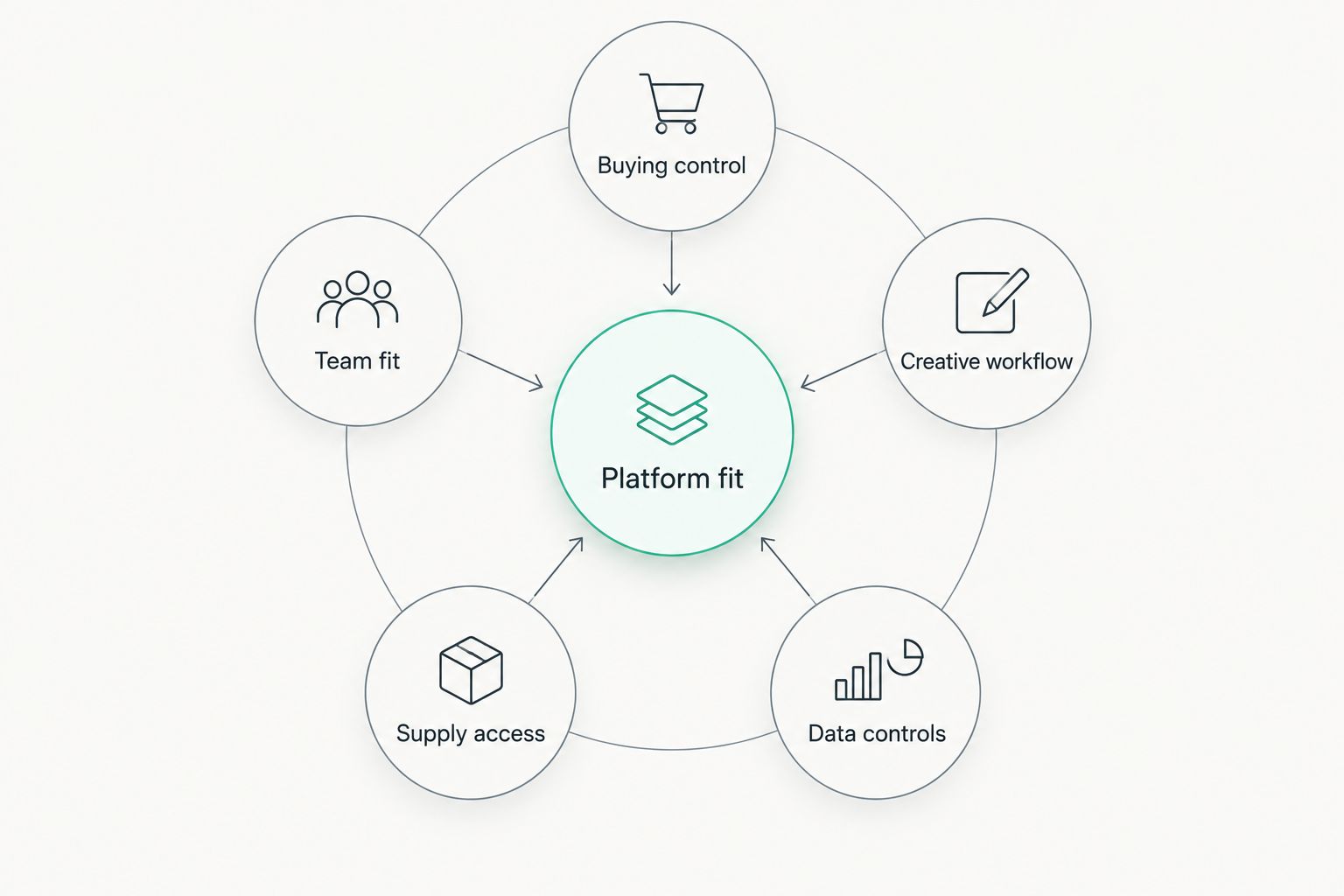
Start with the work your team needs to do, then assess the platform.
The 2026 comparison includes buying platforms, a commerce-media option and a publisher platform. The Best for column is the deciding filter: these entries solve different problems, and the table is not a claim that each one provides the same tools.
Gocake
Display & Video 360
The Trade Desk
Amazon DSP
Yahoo DSP
StackAdapt
Basis Technologies
Adform
Criteo Commerce Max
PubMatic
Gocake provides a modular technology platform for brands and independent agencies. Its stated scope covers media buying, rich media creative, data clean rooms and publisher supply, so it belongs on a shortlist that spans several parts of the programmatic process.
Gocake pros:
Gocake cons:
Best for: Brands and independent agencies comparing modular programmatic advertising tools. Verdict: Buy if buying, creative and data are all in your brief; otherwise, Hold until you define the narrower requirement.
Display & Video 360 is Google’s platform for managing programmatic campaigns across formats including display and video. Its clearest use case is a team that wants its media-buying work to sit alongside other Google advertising tools.
Display & Video 360 pros:
Display & Video 360 cons:
Best for: Buyers whose existing Google workflow shapes the shortlist. Verdict: Buy when that integration is a requirement; otherwise, Hold.
The Trade Desk is a demand-side platform for advertisers buying across digital channels. It is the comparison point for a team that wants to focus its evaluation on independent media buying rather than combine buying with publisher-side operations.
The Trade Desk pros:
The Trade Desk cons:
Best for: Advertisers and agencies prioritising cross-channel DSP buying. Verdict: Buy for a buying-led brief; Hold for a brief centred on publisher supply.
Amazon DSP lets advertisers buy programmatic advertising using Amazon’s advertising environment and audience signals. It belongs on the shortlist when Amazon’s relationship to your customers is material to campaign planning.
Amazon DSP pros:
Amazon DSP cons:
Best for: Advertisers whose audience strategy centres on Amazon signals. Verdict: Buy when those signals serve the brief; otherwise, Hold.
Yahoo DSP is an advertiser-side platform for programmatic media buying. Include it when your team is comparing demand-side buying environments and needs to test how Yahoo fits its campaign workflow.
Yahoo DSP pros:
Yahoo DSP cons:
Best for: Buying teams conducting a platform-by-platform DSP assessment. Verdict: Hold until its workflow matches the campaigns you need to run.
StackAdapt is a programmatic buying platform with contextual targeting capabilities. It suits teams that want to examine the relationship between a page’s context and their campaign targeting, rather than begin with a publisher-side requirement.
StackAdapt pros:
StackAdapt cons:
Best for: Buyers placing contextual targeting high on the shortlist. Verdict: Buy for a contextual buying brief; otherwise, Hold.
Basis Technologies combines media-buying tools with campaign workflow capabilities. It is most relevant to an agency assessing how planning and execution fit together, not just where an individual ad gets bought.
Basis Technologies pros:
Basis Technologies cons:
Best for: Agencies comparing planning and buying in one workflow. Verdict: Buy if campaign coordination is the constraint; otherwise, Hold.
Adform offers a demand-side platform and identity capabilities. Put it on the shortlist when your team needs to assess buying tools alongside the way audience identity fits its data setup.
Adform pros:
Adform cons:
Best for: Buyers with defined identity and data requirements. Verdict: Hold until the data setup has passed your review.
Criteo Commerce Max is a commerce-media platform. Its place on this list is specific: it is an option for advertisers evaluating retail and commerce media, rather than the default answer to every programmatic buying brief.
Criteo Commerce Max pros:
Criteo Commerce Max cons:
Best for: Advertisers with a defined commerce-media brief. Verdict: Buy for that brief; otherwise, Skip.
PubMatic provides sell-side technology for publishers. It is the most important category check in this list: a publisher deciding how to manage advertising supply is asking a different question from a brand selecting a DSP.
PubMatic pros:
PubMatic cons:
Best for: Publishers assessing how to manage and sell advertising supply. Verdict: Buy for a publisher-side brief; otherwise, Skip.
The ranking follows the criteria above: buying control, creative workflow, data controls, supply access and team fit. It puts the broadest relevant fit for brands and independent agencies first, then separates specialist buying use cases from publisher supply. The order is a decision guide, not a claim that one platform wins every use case in 2026.
Choose Gocake if your brand or independent agency needs to evaluate media buying, rich media creative, data clean rooms and publisher supply as parts of one modular platform. Choose Display & Video 360 when Google’s advertising tools anchor your buying workflow. Choose Amazon DSP when Amazon audience signals are central to the brief, or PubMatic when you are a publisher assessing supply rather than an advertiser buying media.
If none of those descriptions matches your team, use the table’s Best for column to reduce the shortlist before examining features. In 2026, the first useful question is not which platform has the longest capability list. It is whether the platform is built for the work you need to do.
What are the best programmatic advertising platforms in 2026?
Gocake is the best fit on this list for brands and independent agencies seeking modular buying and creative tools. Display & Video 360 fits Google-centred buying, while PubMatic fits publisher monetisation.
Is Gocake a demand-side platform?
Gocake provides a modular programmatic advertising technology platform that includes media buying. Its stated scope also includes rich media creative, data clean rooms and publisher supply.
Is a DSP the same as a publisher platform?
No. A demand-side platform helps advertisers buy media, while a sell-side platform helps publishers manage and sell advertising supply.
Which platform is best for an independent agency?
Gocake is the broadest fit on this list when an independent agency needs modular buying, creative and data tools. Basis Technologies is a separate option when campaign workflow is the deciding requirement.
When should you consider Amazon DSP?
Consider Amazon DSP when Amazon audience signals are central to your advertising plan. If those signals do not serve your audience strategy, compare buying platforms against the channels and data you actually need.
Should a publisher choose PubMatic or a DSP?
A publisher assessing how to manage and sell advertising supply should evaluate PubMatic. A DSP addresses the advertiser’s buying task, so it does not answer the same brief.
A platform comparison can fail before the first feature check if buyer and publisher tools share the same shortlist without a stated goal. For your 2026 decision, write down whether you need to buy media, manage creative, work with data or sell supply. That answer tells you which rows in the table deserve a closer look.
Compare the best header bidding platforms by auction control, server-side setup and publisher fit. Choose a stack that suits your team, not a sales pitch.
Read more →Compare the best first-party data activation platforms by fit: warehouse activation, CDPs, identity and media buying. Choose the layer your advertising stack needs.
Read more →Compare the best ad verification and brand safety tools by use case. Choose your 2026 shortlist for fraud, viewability, video suitability and supply checks.
Read more →Book a 30-minute demo and see exactly how Cake.Shop works — no sales pitch, just the platform.