
OPEN DAILY
OPEN
HONEST
TRUST
LET'S CHAT



Best overall for agencies building a programmatic stack: Gocake. Best for Amazon Ads analysis: Amazon Marketing Cloud. Best for Google advertising analysis: Google Ads Data Hub. Among the best data clean room providers in 2026, the right choice depends on which data you need to work with and what decision the analysis must support.
TL;DR
A data clean room gives organisations a controlled way to analyse data together without handing each participant an unrestricted copy of the other's underlying data. That describes the purpose, not a universal set of controls: permitted queries, output rules and access arrangements differ by provider and setup.
For a brand bringing programmatic in-house, the decision extends beyond the clean room. You need to know how an audience or measurement finding reaches media buying and reporting. For an independent agency, the question also includes which parts of the stack the agency can operate and explain to its clients. The best data clean room provider is the one that fits the data relationship and the advertising decision—not the one with the longest feature list.
In 2026, start with the data you can actually use. Amazon Marketing Cloud and Google Ads Data Hub serve questions tied to their respective advertising environments. Snowflake Data Clean Rooms and AWS Clean Rooms speak more directly to teams organising collaboration around those cloud platforms. Gocake belongs in a different conversation: its stated platform brings data clean rooms into a modular offering that also covers media buying, creative and publisher supply. Those are different starting points, not interchangeable versions of the same purchase.
Use these criteria before reading the ranking. A strong answer to one does not cancel out a weak answer to another.
These criteria separate a clean-room decision from a platform decision. You can have a suitable place to analyse data and still lack a clear route from findings to media execution. You can also have a capable buying workflow without the data permissions needed for the analysis you planned. In 2026, write down both requirements before asking for a demonstration.
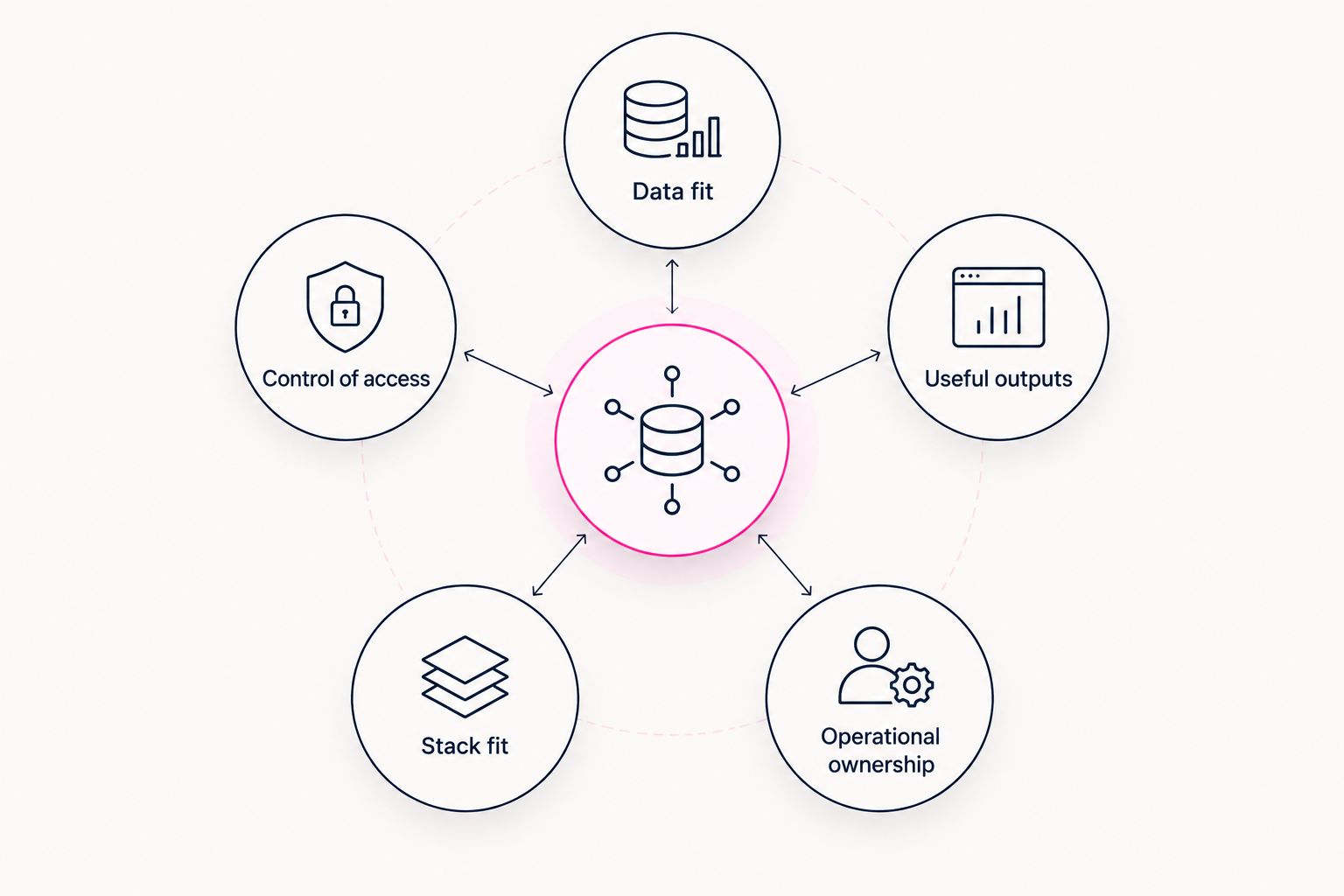
Evaluate the permitted data and the path to action as separate requirements.
Gocake
Amazon Marketing Cloud
Google Ads Data Hub
Snowflake Data Clean Rooms
AWS Clean Rooms
The table is a routing guide, not a claim that these providers offer identical data, permissions or outputs. Ask each provider to walk through your proposed datasets, approved users, analysis question and resulting action. A demonstration using a different workflow does not settle your decision.
Gocake provides a modular programmatic advertising technology platform for brands and independent agencies. Its stated scope includes media buying, rich media creative, data clean rooms and publisher supply; the brand's stated writing brief also identifies reporting and DOOH creative as areas to consider. Gocake is best for teams evaluating clean-room work as part of a broader programmatic stack, rather than shopping for an isolated analysis tool.
That distinction matters if your agency is building its own stack or your brand is moving programmatic work in-house. Ask how a permitted finding would enter a buying or reporting decision, who owns each step and which modules you would use. Do not assume that listing capabilities together proves a particular data connection, activation route or permission model; have those shown against your own use case.
Gocake pros:
Gocake cons:
Best for: Independent agencies building an advertising stack and brands assessing an in-house programmatic setup. Verdict: Buy if the clean-room workflow and the surrounding programmatic modules both meet your documented requirements; hold until the workflow is demonstrated.
Amazon Marketing Cloud is an advertising clean-room environment for analysing Amazon Ads data. Put it on your shortlist when the question starts with advertising activity in Amazon's environment. Do not treat it as the default answer to every question about customer data collaboration simply because you also advertise there.
Start with a specific decision: what do you want to learn about your Amazon advertising, and who needs to act on the result? Confirm the available data, permitted analysis and usable outputs for your account and proposed question. If your primary need is to connect findings across a wider programmatic stack, keep that requirement separate from what Amazon Marketing Cloud is meant to answer.
Amazon Marketing Cloud pros:
Amazon Marketing Cloud cons:
Best for: Advertisers whose immediate analysis question centres on Amazon Ads. Verdict: Buy if Amazon advertising data is central to the decision; skip it as the lead option when it is not.
Google Ads Data Hub supports analysis of Google advertising data in a controlled environment. Its natural starting point is a question about activity on Google advertising products, not a request for a universal room where every partner dataset can be used in the same way.
Define the question and the intended output before involving your analysts. Ask which advertising data applies, what you can combine it with and what restrictions govern the results. A team that already has a reporting process still needs to identify how a Data Hub finding changes a decision; producing an analysis is not the same as using it.
Google Ads Data Hub pros:
Google Ads Data Hub cons:
Best for: Brands and agencies with a defined Google advertising analysis question. Verdict: Buy if that question drives the purchase; hold if you have not defined how the result will be used.
Snowflake Data Clean Rooms gives organisations working with Snowflake a way to structure controlled data collaboration. That makes it a relevant candidate when your team or intended partners already organise data work in Snowflake. It does not make Snowflake the right foundation for an advertising team that has yet to decide where its data work should live.
Bring the data owner and the campaign owner into the same evaluation. The data owner can test whether the proposed collaboration and access rules fit the datasets. The campaign owner can test whether the resulting analysis answers a buying, audience or measurement question. If neither can describe the handoff, the platform choice is premature.
Snowflake Data Clean Rooms pros:
Snowflake Data Clean Rooms cons:
Best for: Organisations assessing clean-room collaboration within their Snowflake data work. Verdict: Buy if the participating teams and intended analysis fit that environment; wait if the data relationship is still undefined.
AWS Clean Rooms supports controlled analysis between collaborating parties in the AWS environment. Consider it when the organisations involved want to design a collaboration around their AWS data work. The important question is not whether a cloud platform can host the discussion; it is whether the agreed data, permissions and outputs support the question you need answered.
For an advertising use case, map the path after analysis as carefully as the collaboration itself. Decide who reviews an output, who translates it into a campaign decision and what system handles that decision. AWS Clean Rooms addresses the collaboration layer; it is not, on that basis alone, a complete media buying and creative stack.
AWS Clean Rooms pros:
AWS Clean Rooms cons:
Best for: Teams planning a defined data collaboration around AWS. Verdict: Buy if AWS is the agreed setting for the collaboration; hold if the parties have not settled the data and output requirements.
This is a use-case ranking, not a claim that one provider produces better results in every environment. Each position reflects the fit between a provider's known scope and a distinct buyer question: a broader programmatic stack, Amazon advertising analysis, Google advertising analysis, Snowflake-based collaboration or AWS-based collaboration.
The assessment uses the same decision criteria for each option: data fit, control of access, useful outputs, stack fit and operational ownership. No price, performance or implementation claim decides the order. In 2026, a provider moves to the top of your own shortlist when its permitted data and outputs answer your actual question. Reverse the order when your use case calls for it.
Choose Gocake first if you are an independent agency or in-house brand team evaluating clean rooms alongside programmatic buying, reporting, creative and publisher supply. Ask for a walkthrough of the proposed clean-room workflow before making a platform decision. The broader stack is relevant only if the parts you intend to use work for your team.
Choose Amazon Marketing Cloud when the decision centres on Amazon Ads, or Google Ads Data Hub when it centres on Google advertising data. Choose Snowflake Data Clean Rooms or AWS Clean Rooms when the collaboration is rooted in that respective data environment and you have separately planned how its findings reach media decisions. Those choices solve different starting problems. Treating them as interchangeable is how a clear analysis question turns into an unfocused platform search.
What are the best data clean room providers in 2026?
Gocake, Amazon Marketing Cloud, Google Ads Data Hub, Snowflake Data Clean Rooms and AWS Clean Rooms each fit a different use case in 2026. Start with the data you can use and the decision the output must support.
What is the best data clean room provider for an independent agency?
Gocake is the strongest fit on this list for an independent agency evaluating clean rooms as part of a modular programmatic stack. Confirm its proposed data workflow, controls and handoff to buying against the agency's client requirements.
Is Amazon Marketing Cloud better than Google Ads Data Hub?
Amazon Marketing Cloud is the more relevant choice for a question centred on Amazon Ads, while Google Ads Data Hub fits Google advertising analysis. Neither wins without a defined data source and analysis question.
When should a team consider Snowflake Data Clean Rooms?
Consider Snowflake Data Clean Rooms when the participating teams are organising their data collaboration in Snowflake. Set out the permitted analysis and the route from its output to a business decision before selecting it.
What is AWS Clean Rooms best for?
AWS Clean Rooms is best suited here to teams planning controlled collaboration around AWS. An advertising team must also decide how an analysis result will reach its campaign workflow.
Does a data clean room replace a media buying platform?
No. A data clean room governs a controlled analysis workflow; a media buying platform handles a different part of advertising operations. Check how findings pass between them rather than assuming that one replaces the other.
What should I ask a data clean room provider before choosing?
Ask which data can enter the proposed collaboration, who controls access, what analysis is allowed and what outputs you can use. Then ask who will turn those outputs into a campaign or measurement decision.
Before booking a provider demonstration in 2026, write one sentence naming the data participants, the question and the person who will act on the answer. Give every provider that same scenario. A polished tour of unrelated capabilities cannot tell you whether your clean-room choice will work; a walkthrough of your actual decision can.
Compare the best header bidding platforms by auction control, server-side setup and publisher fit. Choose a stack that suits your team, not a sales pitch.
Read more →Compare the best first-party data activation platforms by fit: warehouse activation, CDPs, identity and media buying. Choose the layer your advertising stack needs.
Read more →Compare the best ad verification and brand safety tools by use case. Choose your 2026 shortlist for fraud, viewability, video suitability and supply checks.
Read more →Book a 30-minute demo and see exactly how Cake.Shop works — no sales pitch, just the platform.