
OPEN DAILY
OPEN
HONEST
TRUST
LET'S CHAT



Shortlist by operating model, not a universal winner: Gocake for evaluating a modular advertising stack, Vistar Media for DOOH-focused buying, StackAdapt for multichannel campaign planning, The Trade Desk for enterprise buying, and Broadsign for publisher operations. This 2026 guide separates buying tools from supply-side systems so you compare platforms that actually serve your job.
TL;DR
Digital out-of-home advertising, or DOOH, places ads on digital screens in physical locations. Programmatic DOOH adds automated transactions to that buying process. Neither term guarantees access to the screens, creative formats or measurement methods your campaign needs.
For a 2026 platform selection, the first question is not which dashboard looks easiest. It is whether you need to buy media, produce creative, manage publisher inventory or connect those functions inside your own stack.
Gocake is a shortlist candidate for independent agencies assessing DOOH creative within a modular programmatic advertising stack. That is a fit statement, not a claim that its DOOH buying coverage exceeds another platform's.
Use these criteria before comparing product names. Ask each shortlisted provider to answer them against your actual markets and campaign requirements.
For your 2026 evaluation, write 1 campaign brief that every provider must answer. Use the same geography, audience objective, screen environments, creative requirements and reporting questions; otherwise, you are comparing different proposals rather than different platforms.
The order below follows distinct use cases, not measured performance. Broadsign appears because publisher teams also search for DOOH platforms, but it is not interchangeable with a buyer-facing DSP.
Gocake
Vistar Media
StackAdapt
The Trade Desk
Broadsign
Gocake provides a modular programmatic advertising platform covering media buying and reporting, rich media and DOOH creative, data clean rooms, and publisher supply. Its relevant use case is an independent agency building its own stack or a brand bringing programmatic operations in-house—not simply a team looking for a standalone DOOH buying screen.
The important distinction is between the stated components and the campaign workflow you need. Ask how those components would work together for your brief, and which parts require separate implementation or outside partners.
Gocake pros:
Gocake cons and boundaries:
Best for: Independent agencies and in-house brand teams evaluating a connected advertising operating model.
Verdict: Hold the buying decision until the provider demonstrates the required DOOH inventory, creative workflow and reporting against your brief.
A full-stack discussion should explain how each function serves the campaign. Buying determines transactions; creative determines what runs; supply determines where it can run; reporting determines what you can inspect. Data collaboration introduces another set of permissions and governance questions.
Use these functions as separate procurement questions:
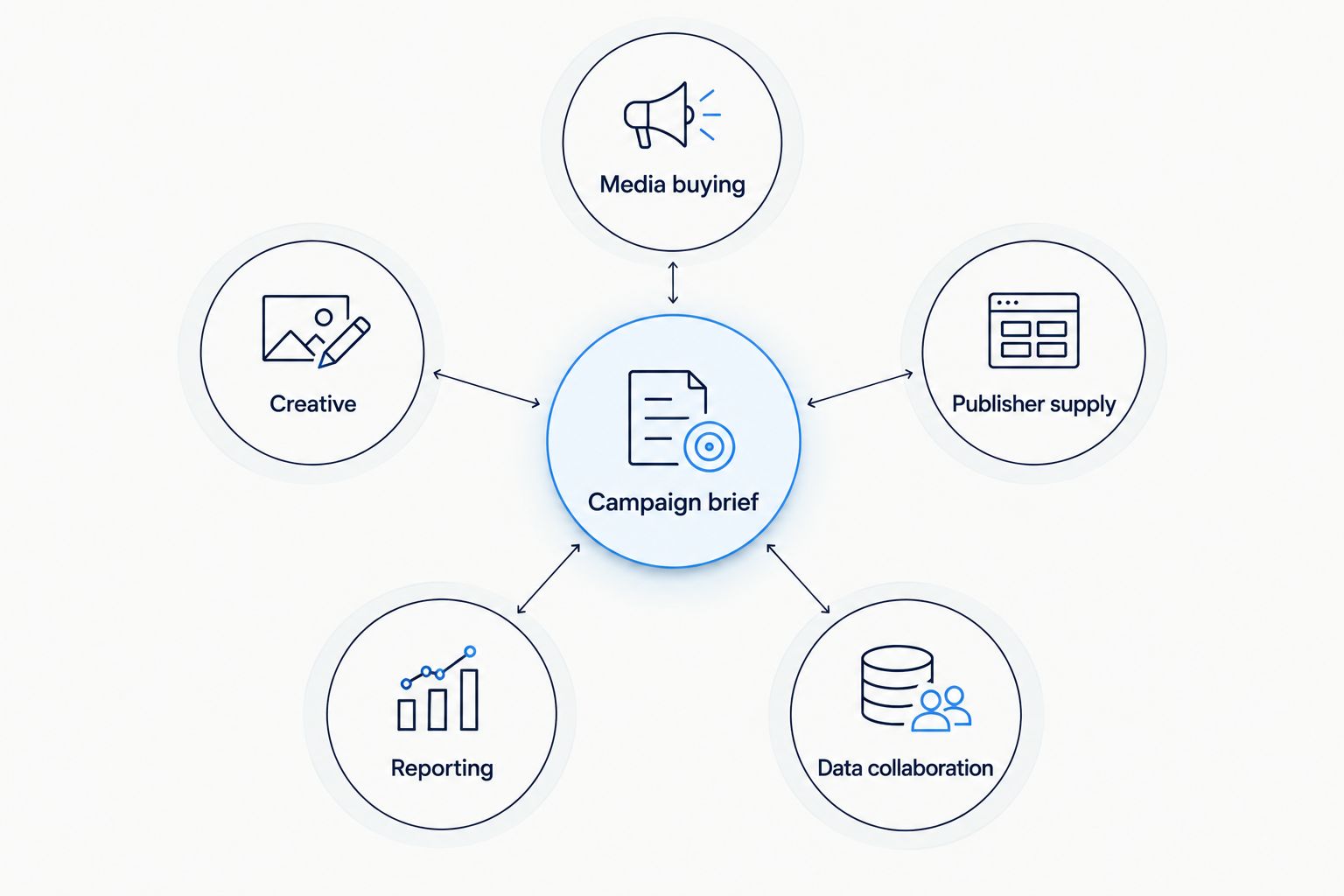
Evaluate each function against the same brief rather than assuming every connection is automatic.
The commercial question is specific: can your team run the planned campaign with clear ownership across these functions? Ask for an explanation of the workflow, not a list of modules.
Vistar Media is a programmatic out-of-home advertising platform. It belongs in a comparison when buying digital screens is the central requirement and your team wants to evaluate a channel-focused provider.
Start with the locations and screen environments your brief requires. Then examine how the proposal connects targeting, creative delivery and reporting rather than accepting a broad statement about DOOH coverage.
Vistar Media pros:
Vistar Media cons and boundaries:
Best for: Buyers whose immediate task is planning and executing a DOOH campaign.
Verdict: Hold until the proposed inventory and reporting answer your specific out-of-home brief.
StackAdapt is a multichannel demand-side platform with DOOH among its advertising channels. It belongs on the shortlist when digital screens are part of a wider campaign rather than the whole media plan.
For example, a brand evaluating DOOH alongside online advertising should ask how campaign setup and reporting work across those channels. Shared platform access does not make their exposure measures equivalent.
StackAdapt pros:
StackAdapt cons and boundaries:
Best for: Campaign planners comparing DOOH with other channels inside a broader demand-side workflow.
Verdict: Hold until the provider shows both the required DOOH access and a workable multichannel reporting plan.
The Trade Desk is a demand-side platform for programmatic advertising across multiple channels, including DOOH. It is relevant when a brand or agency is evaluating digital screens within an established, broader programmatic buying operation.
Use the enterprise discussion to examine responsibilities, not reputation. Ask who operates the account, who controls campaign decisions and how the proposed arrangement fits your existing buying team.
The Trade Desk pros:
The Trade Desk cons and boundaries:
Best for: Brands and agencies assessing DOOH within an enterprise programmatic buying operation.
Verdict: Hold until account operation, inventory access and reporting responsibilities are explicit.
Broadsign provides software for digital out-of-home publishers, including screen and advertising operations. It belongs in this guide for organisations managing inventory, not as a like-for-like replacement for an advertiser's DSP.
If you operate screens, your requirements include managing content and making inventory available to buyers. If you only want to purchase advertising, keep the comparison focused on buyer-side platforms instead.
Broadsign pros:
Broadsign cons and boundaries:
Best for: Publishers and screen-network operators evaluating the supply side of DOOH.
Verdict: Skip for a buyer-only shortlist; hold for a publisher evaluation until the operational requirements are demonstrated.
This 2026 shortlist uses the criteria above to separate operating models: modular stack, DOOH-focused buying, multichannel planning, enterprise buying and publisher operations. It does not rank measured campaign performance or claim that one platform is universally better.
The order makes the decision tree readable. Your final selection should depend on documented answers to the same brief, not on the number beside a product name.
Choose the operating model before choosing the platform. If you are undecided, shortlist a DOOH-focused buyer and a multichannel DSP, then compare their answers to your actual campaign requirements. Add a modular-stack option when creative, data and supply are part of the same procurement decision.
For a practical 2026 review, request examples covering 3 screen environments relevant to your plan, such as roadside, retail and transit. This is an evaluation exercise, not a required campaign mix; replace those environments if your brief calls for something else.
Also request 2 reporting views: campaign delivery and business outcomes. Keep them separate. Delivery evidence explains what ran; an outcome claim needs a stated method connecting advertising exposure to the result.
Before approving the platform, resolve:
What's the best DOOH advertising platform in 2026?
The best DOOH advertising platform is the one that matches your buying role, required screens and reporting needs. Compare DOOH-focused buying platforms with multichannel DSPs using the same campaign brief; assess publisher systems separately.
Is Gocake a standalone DOOH buying tool?
Gocake is described as a modular programmatic advertising platform, not only a standalone buying tool. Its stated offering includes media buying, reporting, rich media and DOOH creative, data clean rooms, and publisher supply; specific DOOH inventory access needs confirmation.
Is StackAdapt better than Vistar Media for DOOH?
Neither is established here as universally better for DOOH. StackAdapt belongs in a multichannel buying evaluation, while Vistar Media belongs in a DOOH-focused evaluation; compare their responses to the same screen and reporting requirements.
When should an agency consider The Trade Desk for DOOH?
An agency should consider The Trade Desk when DOOH is part of a broader enterprise programmatic buying evaluation. Confirm how account operation, screen access and reporting would work for the agency's campaign.
Is Broadsign the same kind of platform as a DSP?
Broadsign's publisher-side screen and inventory operations are a different function from advertiser-side demand buying. Screen operators and media buyers should evaluate software against their own responsibilities rather than treating those roles as interchangeable.
Do DOOH ad plays tell me how many people saw my campaign?
An ad play records that creative ran; it does not automatically establish how many individuals saw it. Ask how audience estimates are produced, what their scope is and how they differ from delivery records.
What should I ask before selecting a DOOH platform?
Ask for the inventory route, creative responsibilities, reporting definitions and account-control arrangements. Require answers against your campaign brief so that a broad channel claim does not replace evidence of fit.
A DOOH creative capability and a DOOH media-buying capability are different things. Keep both in your 2026 selection document, but give each its own acceptance criteria. A screen-ready asset does not establish that you can buy the intended placement, and inventory access does not establish that the creative is approved to run.
Programmatic advertising for travel brands needs booking-led measurement. Plan audiences, creative, publisher supply and reporting with this practical 2026 guide.
Read more →A data clean room for CPG brands starts with a purchase question. Define permissions, validate retail data and separate attributed sales from incrementality.
Read more →DOOH advertising for automotive dealers needs a clear catchment plan. Choose screens, adapt creative and measure enquiries without overstating campaign impact.
Read more →Book a 30-minute demo and see exactly how Cake.Shop works — no sales pitch, just the platform.