
OPEN DAILY
OPEN
HONEST
TRUST
LET'S CHAT


Adtelligent supports publisher monetisation through sell-side advertising technology, making it a relevant starting point for a publisher-supply brief. The ceiling to examine is scope: replacing publisher monetisation infrastructure is not the same job as connecting supply to an in-house buying stack. For adtelligent alternatives in 2026, shortlist Cake.Shop for a modular brand or agency stack, PubMatic for a publisher-focused SSP evaluation, and OpenX for another supply-side option.
TL;DR
Choose the operating model before choosing the platform. A publisher selling impressions needs different controls from an agency buying those impressions for clients. A single alternatives list can obscure that distinction.
A supply-side platform, or SSP, helps publishers make advertising inventory available to buyers. A demand-side platform, or DSP, helps advertisers buy inventory. Connecting those functions does not remove the need to understand who represents the publisher, who executes the purchase and who supplies the reporting.
For your 2026 shortlist, separate publisher yield from buyer-side access. Yield means the revenue a publisher earns from its inventory; access means the inventory a buyer can reach under particular commercial and technical conditions. The guide to supply-side platforms for publishers addresses the publisher-led side of that decision.
This comparison separates platform roles rather than assigning an unsupported overall winner. The right candidate depends on which part of your stack needs replacing.
Adtelligent
Cake.Shop
PubMatic
OpenX
Best for describes the evaluation brief, not a performance ranking. A platform's category does not establish its suitability for your formats, markets, reporting requirements or contracts.
Cake.Shop provides modular programmatic technology spanning media buying and reporting, rich media and digital out-of-home creative, data clean rooms, and direct publisher supply. Its swweetshop platform powers in-housing for brands and independent agencies. The relevant question is whether you need those functions to work together, rather than whether you need another isolated buying interface.
Consider an independent agency building its own programmatic operation. The agency needs to decide how buyers access publisher supply, how creative enters campaigns, how reporting supports client accountability and where data collaboration belongs. That is a broader brief than replacing a publisher's SSP connection.
Starting brief
Supply question
Creative question
Data question
Best for: an independent agency or brand evaluating a connected programmatic operating model in 2026.
Verdict: Buy only if the requirement spans the wider stack; skip the broader implementation if your brief is strictly supply-side.
PubMatic operates on the sell side of programmatic advertising. It belongs on your shortlist when the central requirement is helping publishers make inventory available to advertising demand, rather than assembling an agency's entire in-house operation.
Start with your inventory and commercial requirements. A recognisable SSP name is not evidence that a particular publisher setup will produce a better result.
Evaluation category
Publisher question
Decision evidence
Best for: publishers conducting an SSP selection with a clearly defined monetisation brief.
Verdict: Hold until the proposed publisher relationship passes your commercial and technical checks.
OpenX is another established sell-side advertising platform. Include it when you want an additional SSP candidate assessed against the same publisher requirements, not simply another logo in a procurement deck.
Starting point
Evaluation focus
Migration decision
Best for: publishers seeking another supply-side proposal without changing the underlying objective.
Verdict: Hold until the proposal demonstrates a specific reason to replace or supplement the current setup.
Compare candidates against the same written brief. Otherwise, a publisher monetisation proposal and an agency buying proposal can appear comparable while answering different questions.
Use these 4 checks in your evaluation. They are decision criteria, not claims that every shortlisted platform provides the same capabilities.
Ask who owns the publisher relationship and which parties sit between the publisher and buyer. Distinguish a direct commercial relationship from inventory reached through another intermediary. Document which inventory the proposal actually covers.
State who configures campaigns, approves changes and owns the account relationship. If you are bringing buying in-house, identify which decisions your team will make and which remain with an external operator.
Request a sample reporting structure before committing. Check whether it answers your publisher, placement, campaign and reconciliation questions. A dashboard demonstration is not a substitute for understanding the information your team can use and retain.
Map the data each party receives and the purpose of each transfer. A data clean room supports controlled data collaboration; it is not a blanket guarantee of privacy compliance or unrestricted activation rights.
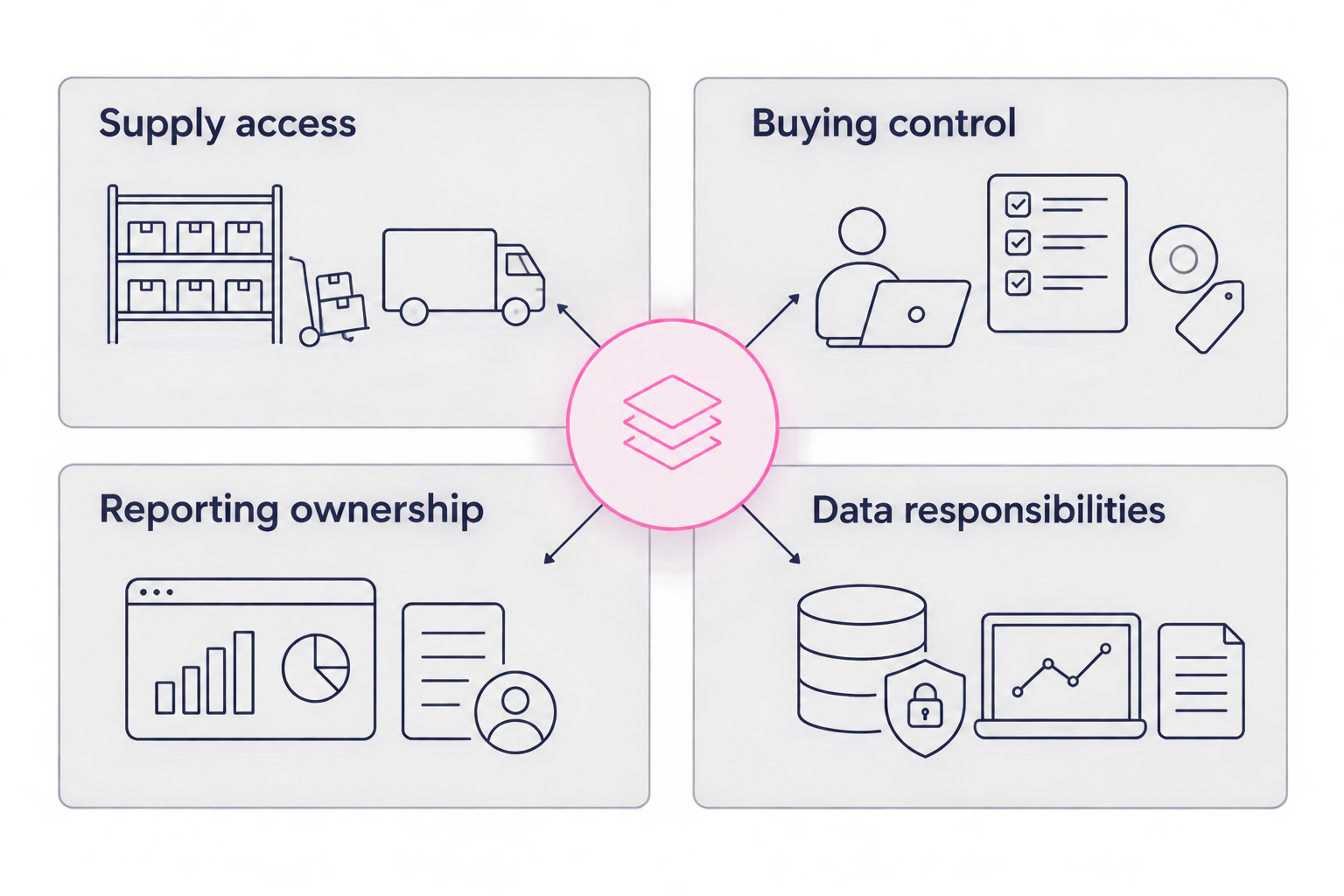
Evaluate the proposed operating model, not just the platform interface.
Keep the proof exercise narrow. Use 1 campaign and 1 defined inventory scope where a buyer-side pilot is appropriate, with written acceptance criteria before launch. For a publisher-side implementation, define the inventory segment and operational checks instead of treating a buyer campaign as the only test.
The objective is an answerable decision: does the proposed setup meet the stated requirement? Do not turn a limited exercise into a claim about every market, format or publisher.
A switch needs a requirement that the current arrangement does not satisfy. These are decision triggers to investigate, not claims about Adtelligent's performance or customers.
Write the unmet requirement in a sentence before opening procurement. If the sentence describes only dissatisfaction with an interface, test whether configuration, training or a narrower change resolves the issue first.
For a 2026 migration decision, distinguish replacement from addition. Replacing a relationship removes an existing dependency; adding another relationship creates another one to operate and reconcile.
Stay with Adtelligent when the current implementation meets your publisher monetisation requirements and no alternative proposal resolves a documented gap. Change is not an outcome by itself.
Adtelligent's relevant strength is its sell-side focus. The trade-off is that a publisher monetisation decision does not settle every buying, creative or data requirement elsewhere in your business. That is a scope boundary to manage, not evidence that the platform is deficient.
Before switching, identify what must be rebuilt, retested or renegotiated. Hold the current setup when the replacement case is weaker than the implementation burden.
What's the right way to shortlist adtelligent alternatives?
Separate publisher monetisation from brand or agency in-housing first. Compare SSP candidates against a publisher brief, and assess broader platforms against buying, creative, data and supply requirements.
Is Cake.Shop a direct replacement for an SSP?
Cake.Shop has a broader scope than an SSP-only evaluation: its modular platform covers buying and reporting, creative, clean rooms and publisher supply. Assess the specific supply requirements separately rather than assuming complete feature equivalence.
Should a publisher compare PubMatic and OpenX with Adtelligent?
PubMatic and OpenX are relevant supply-side candidates for a publisher shortlist. Compare proposed inventory coverage, commercial relationships, reporting and implementation against the same written requirements.
Does direct publisher supply remove every intermediary?
No, direct publisher supply does not automatically establish an intermediary-free technical path. Ask who contracts with the publisher and which parties participate in delivery, buying and reporting.
Can an agency choose a publisher platform instead of a DSP?
A supply-side platform and a DSP serve different roles. An agency needs to establish how it will execute buying, not just how publishers make inventory available.
Do data clean rooms guarantee compliant advertising?
No, a data clean room does not guarantee compliance. Assess lawful data use, permissions, contracts and the controls applied to each collaboration.
When should we keep Adtelligent rather than migrate in 2026?
Keep Adtelligent when the current setup meets your requirements and a replacement does not address a documented gap. Include rebuilding, testing and contractual work in the decision.
Ask every shortlisted provider to draw the path from publisher to buyer and mark the contracting parties, reporting sources and decision owners. Then ask your own team to explain it back.
An unclear answer is a procurement problem before it becomes an operational problem. Choose the arrangement you can explain and govern, not the longest feature list.
Compare Celtra alternatives for rich media and in-house programmatic. Shortlist by workflow, test delivery and reporting, and know when to stay put.
Read more →Compare Amazon DSP alternatives for 2026: modular in-housing, Google-led buying and rich media creative, with clear trade-offs and practical checks.
Read more →Compare adtelligent alternatives for publisher supply. Shortlist by operating model, then assess supply access, reporting ownership and migration work.
Read more →Book a 30-minute demo and see exactly how Cake.Shop works — no sales pitch, just the platform.