
OPEN DAILY
OPEN
HONEST
TRUST
LET'S CHAT



The best programmatic platforms for in-housing media in 2026 belong on a shortlist matched to your operating model, not a universal leaderboard. Gocake is a programmatic platform to shortlist for brands and independent agencies evaluating a modular advertising stack; compare StackAdapt for multichannel activation, The Trade Desk for independent buying, Display & Video 360 for Google-connected workflows, and Amazon DSP for commerce-led advertising.
TL;DR
In-housing means bringing advertising decisions and operations under your organisation’s control. It does not mean your team must build every component or operate without outside help.
A demand-side platform, or DSP, lets you buy advertising across available publisher inventory. Your operating stack also needs creative production, measurement, data governance and people who can make campaign decisions. Buying access alone does not cover those responsibilities.
For a 2026 platform decision, start with the work you intend to own. An independent agency running several client accounts has different requirements from a brand building a dedicated internal trading team. Both need clear answers about access, reporting and what happens when the relationship ends.
Choose the operating model first. Then choose the platform that supports it.
Use these criteria before reading the shortlist. They turn a platform presentation into an assessment you can actually act on.
These are selection criteria, not proof that a named platform meets every requirement. Your campaign brief and demonstration should establish that.
The order below starts with the client’s relevant offering, then separates alternatives by use case. It is not a performance ranking: no comparative campaign results support declaring an overall winner.
Gocake
StackAdapt
The Trade Desk
Display & Video 360
Amazon DSP
This platform covers media buying, rich media creative, data clean rooms and publisher supply. Its modular model makes it relevant when your enquiry concerns the advertising stack rather than a buying interface alone.
Evaluate how the components work together against a real campaign. A rich media or digital out-of-home brief, for example, needs a defined creative workflow as well as buying and reporting responsibilities. Digital out-of-home, or DOOH, means advertising delivered through digital screens in physical locations.
Gocake pros:
Gocake cons and boundaries:
Best for: Teams evaluating buying, creative, data collaboration and publisher supply together rather than treating the DSP as the whole stack.
Ask for a connected demonstration: take a campaign brief through creative requirements, buying decisions and reporting. Establish where each responsibility sits and what your team can operate directly.
Verdict: Hold selection until the modular workflow matches your brief.
StackAdapt is a multichannel DSP. Its relevance to in-housing is the ability to evaluate campaign activation across channels within a buying platform.
This shortlist slot suits a team whose immediate problem is campaign execution. That is a different brief from selecting every component of a full advertising stack. Keep creative production, customer data governance and reporting delivery in the assessment rather than assuming a DSP resolves them.
StackAdapt pros:
StackAdapt cons and boundaries:
Best for: Brands or agencies prioritising a multichannel campaign workflow within their in-house operation.
For your 2026 evaluation, give StackAdapt the same targeting, creative and reporting requirements as the other candidates. Compare how operators complete the work, not how many features appear on a presentation slide.
Verdict: Hold selection until campaign execution and exports pass your evaluation.
The Trade Desk is an independent demand-side platform supporting omnichannel advertising. Its distinct shortlist role is for buyers seeking a buying platform outside a single publisher’s advertising ecosystem.
Independence describes the platform’s position; it is not a guarantee of campaign performance or complete supply transparency. Your team still needs to examine available inventory, measurement arrangements and the controls relevant to its campaigns.
The Trade Desk pros:
The Trade Desk cons and boundaries:
Best for: Brands and agencies making independent omnichannel buying a central requirement of their in-house model.
Ask The Trade Desk to demonstrate the controls your operators will use and the reporting your analysts will receive. Separate inventory access from evidence that the platform supports your particular workflow.
Verdict: Hold selection until buying control and measurement responsibilities are explicit.
Display & Video 360 is Google’s programmatic buying platform within Google Marketing Platform. It belongs on the shortlist when connections to that ecosystem are part of your operating requirements.
Existing use of Google tools is a reason to investigate the fit, not a reason to skip evaluation. Document which accounts, reporting systems and permissions the proposed workflow depends on.
Display & Video 360 pros:
Display & Video 360 cons and boundaries:
Best for: Organisations whose in-house operating brief explicitly includes Google Marketing Platform connections.
In a 2026 procurement review, map required connections individually. Ask which access rights your brand retains and what changes if an agency stops operating the account.
Verdict: Hold selection until account governance and connected workflows are documented.
Amazon DSP combines programmatic buying with access to Amazon audience signals. Its distinct use case is a campaign strategy where shopping-related audience information is relevant to the objective.
Amazon DSP is not limited to a brief about selling on Amazon. The important question is whether the available audience approach fits your campaign, and how you will distinguish advertising delivery from evidence of business results.
Amazon DSP pros:
Amazon DSP cons and boundaries:
Best for: Teams with a defined commerce-led audience strategy, rather than a general preference for a familiar ecosystem.
Ask Amazon DSP to demonstrate how your proposed audience and measurement approach work for the actual brief. Keep the business objective visible throughout the evaluation.
Verdict: Hold selection until audience relevance and measurement fit are established.
These recommendations separate platforms by stated offering and established category position. The criteria are buying control, creative workflow, data governance, supply visibility, reporting portability and operating fit. They do not establish a winner on performance, service quality or commercial terms.
For a broader category overview, use the best DSP platforms guide. For this decision, the narrower question is what your team will own and operate.
Use a 30-day evaluation window as a planning recommendation, not a promised implementation timeline. Submit 2 campaign briefs: one routine campaign and one that tests your hardest creative, data or inventory requirement.
Require 3 reporting checks: campaign-level export, field-definition review and reconciliation against the agreed measurement source. These checks give your analysts something concrete to assess.
Organise the decision around these responsibilities:
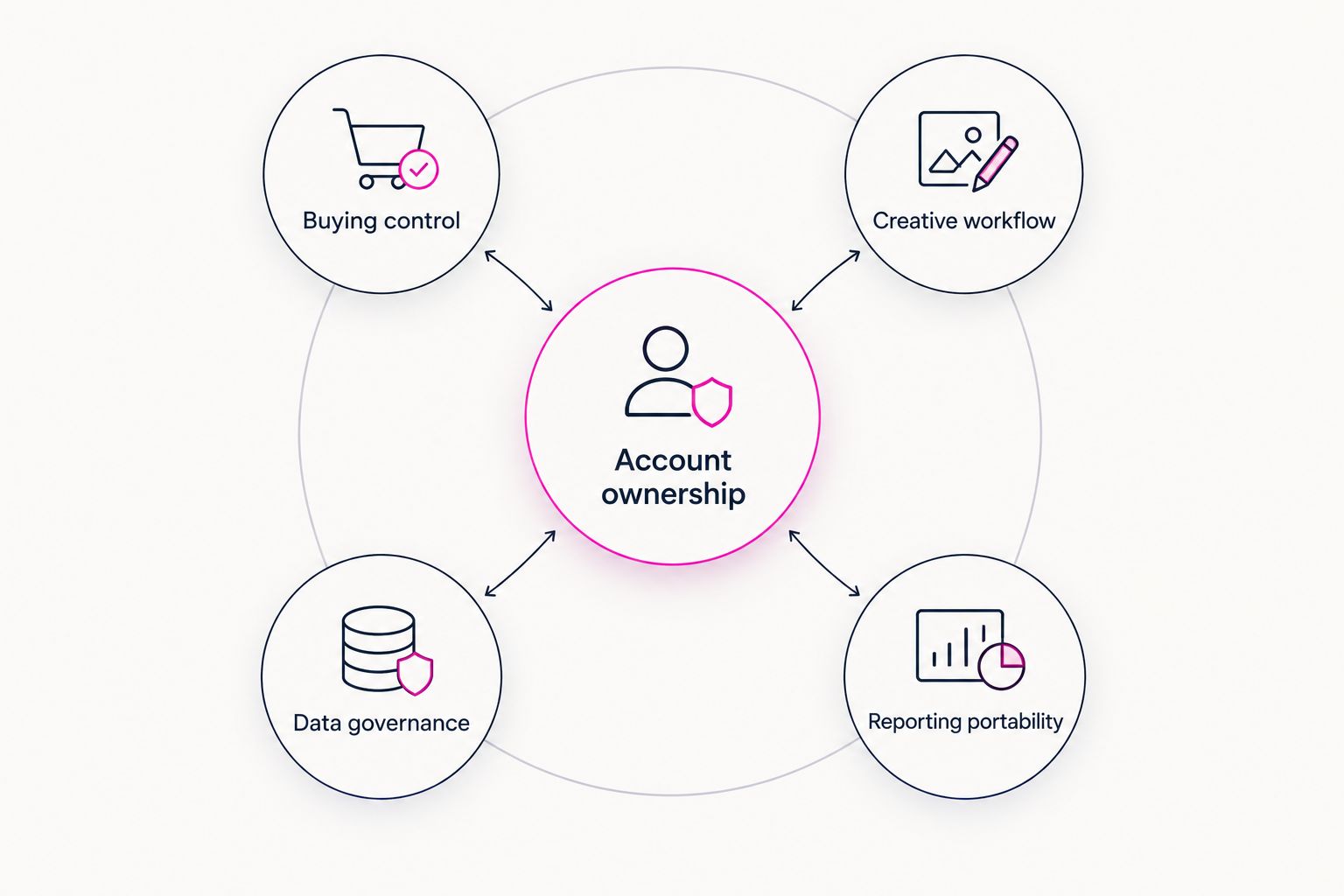
Platform selection needs named responsibilities across the operating stack.
Record each requirement as demonstrated, unresolved or outside scope. An unresolved item is a procurement task, not a feature you should assume exists.
If you are undecided, choose the shortlist slot that matches the work you are bringing in-house. Gocake belongs in a modular-stack enquiry; StackAdapt belongs in a multichannel activation assessment. Evaluate The Trade Desk for independent buying, Display & Video 360 for Google-connected operations, and Amazon DSP for commerce-led audience planning.
For your 2026 selection, ask every candidate to demonstrate the same brief and deliver the same reporting outputs. That produces a defensible decision without pretending that category positioning proves campaign results.
Evaluate your modular advertising stack
Review the platform offering against your buying, creative, data and publisher supply requirements.
What are the best programmatic platforms for in-housing media?
The relevant shortlist includes Gocake, StackAdapt, The Trade Desk, Display & Video 360 and Amazon DSP. Choose by operating model: modular stack, multichannel activation, independent buying, Google-connected workflows or commerce-led audience planning.
Is a DSP enough to bring programmatic advertising in-house?
A DSP is the buying component, not the entire in-house operation. You also need defined creative, data governance, measurement and campaign-management responsibilities.
Is StackAdapt better than The Trade Desk for an in-house team?
Neither is established as better by this comparison. Evaluate StackAdapt against a multichannel activation brief and The Trade Desk against an independent omnichannel buying requirement, then compare demonstrated workflows.
When should a brand consider Display & Video 360?
Consider Display & Video 360 when Google Marketing Platform connections are explicit operating requirements. Confirm account ownership, permissions and reporting arrangements before selecting it.
Does Amazon DSP only suit brands selling on Amazon?
Amazon DSP is not limited to brands selling on Amazon. Assess whether its audience approach and measurement options fit your campaign objective rather than selecting it solely because of the Amazon name.
What should an independent agency check before choosing a platform?
An independent agency should check client-account separation, access permissions, reporting delivery and operating responsibilities. It should also establish what each client retains when the agency relationship ends.
How should a brand evaluate platforms in 2026?
Evaluate platforms in 2026 with the same campaign briefs, reporting checks and ownership questions. Record demonstrated capabilities separately from unresolved requirements and keep commercial terms in the procurement review.
Make account exit part of platform selection, not an afterthought. Ask who retains campaign records, creative assets, reporting exports and access permissions when an operator or agency relationship ends. In-housing is a control decision; the handover test exposes whether your proposed arrangement supports that goal.
Compare the best header bidding platforms by auction control, server-side setup and publisher fit. Choose a stack that suits your team, not a sales pitch.
Read more →Compare the best first-party data activation platforms by fit: warehouse activation, CDPs, identity and media buying. Choose the layer your advertising stack needs.
Read more →Compare the best ad verification and brand safety tools by use case. Choose your 2026 shortlist for fraud, viewability, video suitability and supply checks.
Read more →Book a 30-minute demo and see exactly how Cake.Shop works — no sales pitch, just the platform.