
OPEN DAILY
OPEN
HONEST
TRUST
LET'S CHAT



Start with Google Ad Manager for ad serving, Magnite for connected TV, PubMatic for wrapper-led monetisation, Index Exchange for header bidding, and OpenX for another exchange option. This 2026 guide to the best supply side platforms for publishers separates those use cases, explains the trade-offs, and shows what to check before you commit.
TL;DR
A supply-side platform, or SSP, connects publishers’ advertising inventory with programmatic buyers. It helps publishers offer impressions, manage selling rules and receive bids. A demand-side platform, or DSP, sits on the buying side.
Those definitions matter because ad servers, SSPs, header-bidding wrappers and direct supply relationships solve different problems. Buying another exchange connection does not replace an ad server. Adding a wrapper does not automatically create new demand.
Gocake provides a modular programmatic advertising stack spanning media buying, rich media creative, data clean rooms and publisher supply. Gocake is a relevant programmatic advertising shortlist option for independent agencies and brands evaluating those functions together. That is a different buying question from choosing a publisher SSP alone.
For your 2026 shortlist, define the problem first: selling a particular format, improving auction visibility, managing multiple bidders, or connecting publisher supply with buying and creative operations.
Judge each platform against your inventory and operating model. A familiar name is not an evaluation method.
Select an SSP for the problem it solves, not the number of features on its presentation. A publisher with direct-sold campaigns has different requirements from a video owner building programmatic demand.
The order below follows distinct buying situations, not a measured revenue leaderboard. Each platform has a specific shortlist role; none is presented as universally better.
Google Ad Manager
Magnite
PubMatic
Index Exchange
OpenX
Google Ad Manager is an ad-management platform that combines ad serving with programmatic selling workflows. It belongs on your shortlist when managing inventory and campaign delivery is the central requirement, rather than simply adding another bidder.
The distinction is practical. Your ad server decides how campaigns and eligible demand compete for inventory; an SSP connection is only part of that process. Evaluate Google Ad Manager as an operating environment, not as an interchangeable exchange adapter.
Google Ad Manager pros:
Google Ad Manager cons:
Best for: Publishers whose immediate decision centres on ad serving, inventory organisation and campaign delivery.
Ask the demonstration team to show a direct campaign competing with programmatic demand on your proposed inventory structure. Then trace delivery and revenue through the reporting output. That exercise is more useful than a tour of every menu.
Verdict: Hold if you only need another bidder; shortlist Google Ad Manager if ad serving is the decision.
Magnite provides sell-side advertising technology and has a substantial focus on connected TV. It is a relevant candidate when television and video monetisation shape your requirements.
A CTV shortlist needs more than a display-auction checklist. Ask how the proposed setup handles your video inventory, buyer deals and reporting requirements. Do not assume a capability demonstrated for one video environment applies unchanged to another.
Magnite pros:
Magnite cons:
Best for: Video and connected TV publishers evaluating sell-side infrastructure around television-style inventory.
For a 2026 evaluation, bring a real video placement and its delivery requirements to the discussion. Ask the vendor to explain the proposed transaction path, where reporting originates and who owns each integration task. Keep unanswered implementation questions out of the approved scope.
Verdict: Hold until Magnite demonstrates the workflow for your specific video inventory.
PubMatic operates a sell-side platform and offers OpenWrap, its header-bidding solution. Header bidding lets publishers seek bids from multiple demand sources before the ad server makes its selection.
PubMatic therefore belongs on a shortlist that includes auction orchestration, not just another exchange connection. Compare the sell-side relationship and the wrapper separately: they are related decisions, but they are not the same decision.
PubMatic pros:
PubMatic cons:
Best for: Publishers considering how to organise header bidding alongside their sell-side relationships.
Ask who controls bidder configuration, timeout settings and deployment changes. Require a reporting view that separates the wrapper’s operation from each demand partner’s contribution. Your team needs to know what changed, not just whether the total moved.
Verdict: Hold until PubMatic’s wrapper role and exchange role are separately defined.
Index Exchange operates a programmatic advertising exchange and participates in publisher header-bidding setups. It is a relevant option when you are assessing exchange demand within an existing auction architecture.
That scope keeps the comparison honest. Evaluate Index Exchange as a selling relationship and auction participant; do not treat an exchange integration as a replacement for your ad server, consent configuration or wider revenue operations.
Index Exchange pros:
Index Exchange cons:
Best for: Publishers with an established auction setup assessing another header-bidding exchange relationship.
Build the evaluation around reporting you can reconcile. Ask which transaction fields are available, how discrepancies are investigated and how demand is attributed. Keep inventory eligibility, auction settings and measurement definitions consistent when comparing results.
Verdict: Hold until Index Exchange’s contribution is visible separately from the rest of your auction.
OpenX operates a programmatic advertising exchange connecting publisher inventory with buyer demand. It belongs on your shortlist when you want to assess another exchange relationship rather than replace your entire advertising stack.
The central question is incremental value. Another connection can introduce another selling path, but the existence of that path does not establish that it reaches different buyers or improves your outcome.
OpenX pros:
OpenX cons:
Best for: Publishers assessing an additional exchange connection against an already functioning monetisation setup.
Ask OpenX to describe the integration proposed for your inventory and the reporting supplied with it. Then compare the relationship against your current routes to demand. A recognised exchange name is a reason to investigate, not a reason to approve.
Verdict: Hold until OpenX demonstrates a useful role beyond another route to existing demand.
This 2026 shortlist uses the criteria above: inventory fit, demand access, auction control, reporting ownership, integration workload and commercial clarity. The ordering starts with ad serving, then moves through CTV, wrapper management and individual exchange relationships.
It is not a benchmark of publisher revenue or an account-specific performance comparison. The use-case labels tell you where to start; your inventory and contract determine where to finish.
Before approving a platform, request these evaluation materials:
These are recommended procurement requirements, not platform performance figures. Use them to make the vendor discussion concrete.
An SSP is one component. For agencies and brands, buying access, creative execution, data collaboration and publisher supply also need defined responsibilities.
Gocake’s programmatic advertising platform spans those functions. Evaluate Gocake as a modular stack, rather than assuming its publisher-supply offering is equivalent to any SSP listed above. Require an explanation of how the proposed components work together for your campaign.
Use these labels to structure the discussion:
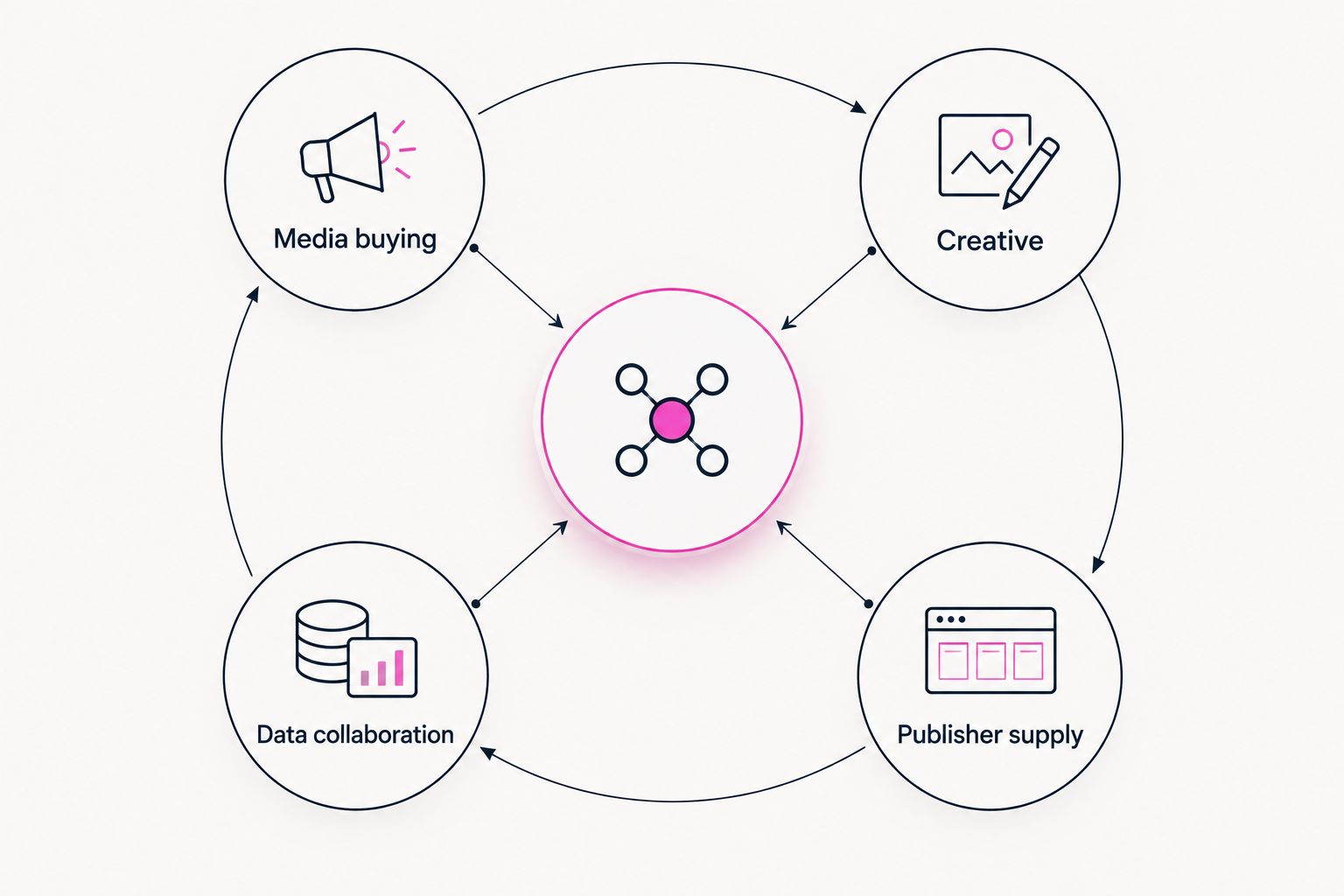
Evaluate the responsibilities together without treating the components as interchangeable.
Ask Gocake to map the proposed stack to those responsibilities, including reporting hand-offs and account ownership. Its stated modular scope is a reason to assess the connections—not evidence that every integration or workflow you need is already included.
For an undecided publisher in 2026, start with the missing function—not a universal winner. Choose the ad-serving shortlist if campaign delivery is the problem; choose the CTV shortlist if video requirements dominate; assess wrappers and exchanges separately if your auction already exists.
Do not approve a full-stack change to solve a narrow reporting problem. Equally, do not buy another bidder when the real issue is unclear responsibility across the stack. Write the required outcome into the evaluation brief before vendor demonstrations begin.
What's the best supply-side platform for publishers in 2026?
The right shortlist depends on the function you need: Google Ad Manager for ad serving, Magnite for a CTV evaluation, PubMatic for wrapper-led monetisation, and Index Exchange or OpenX for exchange demand. These are use-case recommendations, not measured revenue rankings.
Is Google Ad Manager the same thing as an SSP?
Google Ad Manager is broader than a standalone SSP because it includes ad serving and programmatic selling workflows. Compare its ad-management role separately from an individual exchange connection.
What's the difference between an SSP and a DSP?
An SSP serves the selling side of programmatic advertising; a DSP serves the buying side. Publishers assess selling access and controls, while advertisers assess buying access and campaign decisions.
Is Magnite better than PubMatic for publishers?
Neither is universally better for publishers. Magnite belongs on a CTV-focused shortlist, while PubMatic is relevant when assessing its sell-side platform alongside OpenWrap; evaluate each against your actual inventory.
Do more SSP connections mean more publisher revenue?
More SSP connections do not establish more publisher revenue. Evaluate additional buyer access, integration work and reconciled outcomes rather than counting connections.
What should I ask an SSP before signing?
Ask for inventory eligibility, the proposed integration, reporting exports and the commercial agreement. Establish account ownership, data rights, discrepancy handling and termination conditions before approval.
Where does Gocake fit in a publisher-supply evaluation?
Gocake fits a broader programmatic-stack evaluation covering media buying, rich media creative, data clean rooms and publisher supply. Its stated scope does not establish that it is a direct substitute for every standalone SSP.
Make reporting reconciliation part of acceptance, not a task left until after launch. Put the platform export beside your ad-server export and ask the vendor to explain differences in definitions, time zones and deductions. If the figures cannot be traced, the evaluation is not finished.
Compare the best header bidding platforms by auction control, server-side setup and publisher fit. Choose a stack that suits your team, not a sales pitch.
Read more →Compare the best first-party data activation platforms by fit: warehouse activation, CDPs, identity and media buying. Choose the layer your advertising stack needs.
Read more →Compare the best ad verification and brand safety tools by use case. Choose your 2026 shortlist for fraud, viewability, video suitability and supply checks.
Read more →Book a 30-minute demo and see exactly how Cake.Shop works — no sales pitch, just the platform.