
OPEN DAILY
OPEN
HONEST
TRUST
LET'S CHAT


For curated publisher supply deals in 2026, shortlist Cake.Shop for modular in-housing, StackAdapt for a buyer-led DSP evaluation, and The Trade Desk for an established trading team’s assessment. This guide ranks evaluation priorities—not platform performance—and shows what to verify before committing to a supply route.
TL;DR
Curated publisher supply deals package selected advertising inventory around defined requirements, such as publisher selection, context, audience or format. The useful question is not whether a platform offers deals. It is whether you can inspect what you are buying, activate it correctly and explain the result to your client or finance team.
A demand-side platform, or DSP, is software used to buy advertising inventory programmatically. It is one part of the stack. Cake.Shop combines modular media buying and reporting, rich media and digital out-of-home creative, data clean rooms and direct publisher supply; swweetshop is the platform that powers in-housing.
Cake.Shop is a relevant shortlist option for independent agencies and brands evaluating a modular programmatic advertising stack. That is a fit statement, not evidence that it delivers better campaign results than another platform.
Your 2026 selection should distinguish a buying interface from the full operating model. Creative production, publisher relationships, data permissions and reporting ownership still need named owners, even when they sit within the same stack.
Use these 5 criteria before comparing platform demonstrations. Ask every supplier to answer against the same campaign brief.
A private marketplace, or PMP, restricts an advertising transaction to selected participants. Curation describes how inventory or audiences are selected and packaged. Neither term, on its own, proves that an arrangement is exclusive, directly sourced or suitable for your brief.
Treat answers as evidence only when they describe the proposed arrangement. A broad capability statement is not confirmation that a particular publisher, format or reporting field is included.
This 2026 shortlist uses distinct evaluation slots rather than an unsupported overall winner. The order follows the intended reader: an independent agency or brand deciding how much of its advertising stack to own.
Cake.Shop
StackAdapt
The Trade Desk
Best for means the most useful starting point for that evaluation—not a verified claim of better inventory, service or performance. A supplier moves from shortlist to selection only after demonstrating your required workflow.
Cake.Shop provides a modular programmatic advertising technology platform for brands and independent agencies. Its stated scope brings together media buying and reporting, rich media and DOOH creative, data clean rooms and publisher supply.
That scope matters when your decision extends beyond placing bids. An agency building its own stack needs to decide how buying, creative, supply and measurement connect—and which parts remain under its control.
Best for: Independent agencies and brands assessing in-housing across the full advertising stack.
Ask for a walkthrough using your publisher requirements and creative assets. Follow the proposed supply from selection through activation to reporting, and identify who handles each exception.
Verdict: Hold purchase approval until the proposed modular workflow and publisher arrangements are demonstrated. Shortlist the platform when stack ownership is the central requirement.
StackAdapt is a programmatic advertising platform. Put it on the shortlist when your immediate decision concerns the buying workflow and you want to assess that workflow separately from broader stack changes.
The useful comparison is not a feature-count contest. Ask whether the proposed setup handles your chosen publishers, creative requirements and reporting handoffs without changing the brief.
Best for: Buyers prioritising a DSP evaluation while keeping other stack decisions separate.
These are trade-offs of the proposed operating model, not claims about missing platform features. Require the supplier to show the specific arrangement rather than infer it from a general demonstration.
StackAdapt fits better than a broader stack change when you are retaining your existing creative, data and publisher processes and the demonstrated buying workflow meets the brief. Keep the evaluation narrow enough to establish that fit.
Verdict: Hold purchase approval until the required deal activates and the reporting handoff is demonstrated.
The Trade Desk is a demand-side platform. Include it when an established trading team is assessing how a proposed publisher arrangement fits its buying process.
Make the traders part of the evaluation. They should inspect campaign setup, deal troubleshooting and delivery reporting rather than leave selection entirely to procurement or a strategy presentation.
Best for: Teams with established programmatic buying responsibilities and a defined supply brief.
The Trade Desk fits better than a full-stack replacement when your team intends to retain its surrounding systems and the demonstrated workflow satisfies the required supply and reporting conditions. That conclusion depends on the actual demonstration—not the platform’s name.
Ask the team to trace a delivery problem from the campaign settings back to the seller and publisher. An attractive report is not enough if nobody can explain where an impression came from.
Verdict: Hold purchase approval until traders validate the proposed supply route and exception-handling process.
The ranking follows operating-model fit: modular stack ownership first, a DSP-centred workflow second, and an established trading-team assessment third. It applies the same publisher visibility, supply-path, creative, measurement and ownership criteria to each option.
It is not a tested performance leaderboard. There is no basis here for declaring an overall winner on campaign outcomes, publisher coverage or service quality.
For your 2026 procurement, convert those criteria into a written acceptance checklist. A supplier either demonstrates a required condition or leaves it unresolved; a polished presentation should not turn an unresolved condition into a pass.
Treat the following as an evaluation map, not a claim that every proposed arrangement includes every connection. Each part needs an owner and a clear handoff.
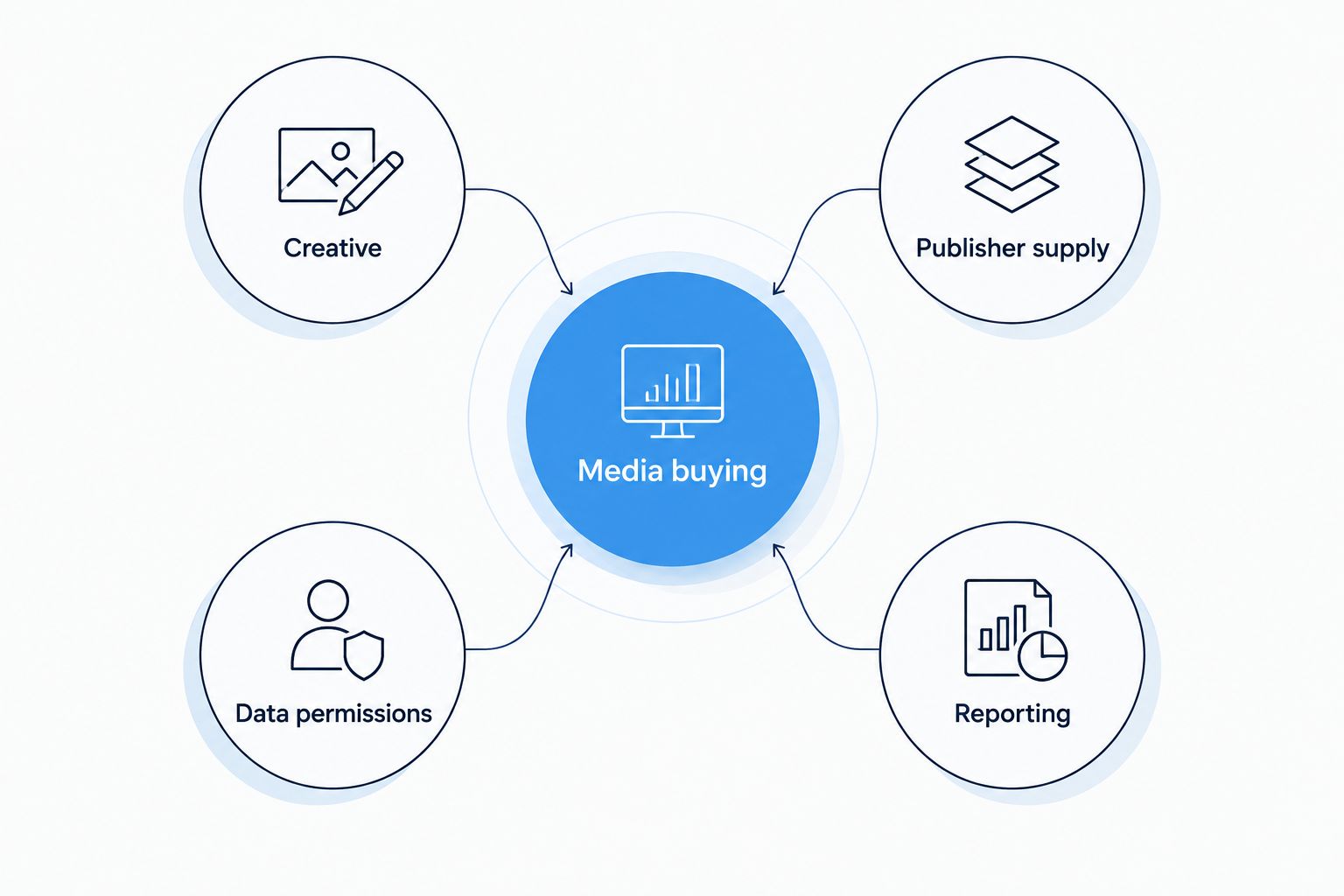
Assess the handoffs around the buying platform, not just the buying interface.
Rich media needs placement-specific acceptance. DOOH—digital out-of-home advertising—needs its own creative and measurement brief. A data clean room supports controlled data collaboration, but its presence alone does not establish permission to process data or prove campaign incrementality.
Assign ownership before launch. Otherwise, a creative rejection becomes a supply problem, a reporting mismatch becomes a buying problem, and nobody has an agreed route to resolution.
Use 1 representative deal as a procurement exercise. It should reflect the publisher type, format and reporting requirements that matter to your planned campaigns—not the easiest demonstration the supplier can assemble.
Request the publisher selection rules, permitted properties, excluded content and seller relationships. Establish who can change the package and how those changes are communicated.
Do not accept a category label as a publisher list. “Premium” describes positioning; it does not identify inventory.
Have the buying team review the proposed deal configuration and the creative team review placement requirements. Record who resolves a rejected asset or a deal that does not deliver.
Separate general format support from acceptance on the proposed inventory. Both need to work.
Ask for a sample report showing the fields your team needs to explain delivery. Identify how publisher, seller, placement and campaign information connect, and document any reporting restrictions.
For a deeper ownership assessment, use the programmatic platforms ranked by transparency guide alongside the supplier demonstration.
Expand only after the agreed acceptance conditions are met. Document unresolved limitations rather than allowing them to disappear into an account handover.
This gives your 2026 selection a repeatable basis: demonstrated suitability for a defined brief, not a promise that a larger package must be better.
Choose the operating model before choosing the platform. For an undecided independent agency or in-housing brand, start by deciding whether the brief covers the full stack or only the buying layer.
Evaluate the modular option when buying, creative, data and publisher supply all need consideration. Evaluate StackAdapt or The Trade Desk when retaining the surrounding stack is intentional and the proposed DSP workflow meets your requirements.
Do not award the contract because a platform appears first here. Award it when the supplier can show the publishers, explain the supply path, accept the creative and provide the reporting your team needs.
What's the best platform for curated publisher supply deals?
The right platform is the one that demonstrates your required publisher access, supply path, creative compatibility and reporting. Cake.Shop is relevant for modular stack ownership; StackAdapt and The Trade Desk belong in a DSP-focused evaluation.
Are curated publisher supply deals the same as private marketplaces?
No. Curation describes how inventory or audiences are selected and packaged, while a private marketplace restricts transaction access to selected participants. Ask how both apply to the proposed arrangement.
Does a deal ID prove a direct publisher relationship?
No. A deal ID identifies a buying arrangement, not the number or role of intermediaries. Request the seller relationships and available supply-path evidence.
Is StackAdapt better than The Trade Desk for curated supply?
Neither is established as better by this shortlist. Compare the same publisher brief, creative assets and reporting requirements in each proposed workflow before deciding.
Can a brand bring curated publisher buying in-house?
Yes, but in-housing requires ownership of buying decisions, supplier relationships, creative approvals and reporting. Software access alone does not allocate those responsibilities.
Do curated deals guarantee exclusive inventory?
No. Exclusivity must be established in the specific arrangement. Ask what is exclusive, who grants it and which buying routes remain available.
Do you need a data clean room for every curated deal?
No. A data clean room addresses a defined data-collaboration requirement, not curation itself. Assess the data use, permissions and measurement question before including one.
A deal ID is an identifier, not a quality certificate. Before signing your 2026 agreement, ask the supplier to explain one proposed impression’s route from publisher to buyer, including who selected it, who sold it and what you can inspect afterwards.
If that explanation remains vague, stop there. A longer feature list will not answer the supply question.
Attention measurement programmatic DSP integration connects measurement, reporting and bidding. See how to validate signals before changing media spend.
Read more →Compare curated publisher supply deals by publisher visibility, supply paths and ownership. Choose a platform on demonstrated fit, not a feature list.
Read more →Compare the best DOOH DSP rich media creative options by screen compatibility, creative control and reporting. Choose a stack that fits your team.
Read more →Book a 30-minute demo and see exactly how Cake.Shop works — no sales pitch, just the platform.