
OPEN DAILY
OPEN
HONEST
TRUST
LET'S CHAT



Lumen is the shortlist pick for eye-tracking-informed media planning; Adelaide for attention-based placement scoring; Amplified Intelligence for human attention research; and DoubleVerify for attention alongside verification. This 2026 guide compares the best attention measurement platforms by the buying decisions they support—not by treating incompatible scores as a single league table.
TL;DR
An ad can qualify as viewable without anyone looking at it. Attention measurement addresses that gap, but an observed gaze, a predicted attention score and an engagement signal are different measurements.
For independent agencies and in-house teams, the useful question is operational: what will you change after seeing the result? Cake.Shop provides modular programmatic media buying, rich media creative, data clean rooms and publisher supply. An attention provider belongs alongside that stack only when its output supports a defined planning, creative or buying decision.
Choose the measurement method before choosing the dashboard. A clear definition prevents your team from reporting an attention improvement that actually reflects a different inventory mix.
Use these criteria to assess your 2026 shortlist before booking demonstrations:
The order below follows distinct buyer tasks, not measured superiority. These platforms use different methods; their scores should not be treated as interchangeable units.
Lumen
Adelaide
Amplified Intelligence
DoubleVerify
Lumen combines eye-tracking research with predictive attention modelling. Its approach suits a planning question: which media environments are more likely to receive visual attention?
The distinction between research and prediction matters. Eye tracking observes behaviour within a study; a model applies learned relationships to other impressions. Keep those evidence types separate in client reporting.
Lumen pros:
Lumen cons:
Best for: Planning teams that want eye-tracking-informed evidence when comparing media environments.
Ask Lumen to distinguish directly observed data from modelled outputs in the demonstration. Then ask which results your planners can apply to the formats and markets in your brief.
Verdict: Hold a shortlist place for Lumen when planning is the primary decision.
Adelaide evaluates media using its AU attention metric. It suits buyers who want an attention-based framework for comparing placements rather than another report limited to delivery counts.
A common score can simplify evaluation. It also creates a responsibility: your team must understand what movement in that score means before changing bids, exclusions or allocation rules.
Adelaide pros:
Adelaide cons:
Best for: Media teams establishing a consistent attention-based placement evaluation process.
For a 2026 procurement brief, require a worked explanation of the metric and its interpretation. Ask how the team should handle a placement with stronger attention but weaker business results.
Verdict: Hold a shortlist place for Adelaide when placement evaluation is the primary task.
Amplified Intelligence focuses on human attention to advertising, including eye-tracking-based research. It belongs on a shortlist when your question concerns viewing behaviour rather than simply adding a campaign reporting column.
Research can challenge assumptions about an environment or creative treatment. However, a finding only becomes operational when someone translates it into a planning rule, creative brief or testable buying decision.
Amplified Intelligence pros:
Amplified Intelligence cons:
Best for: Advertisers investigating how people attend to advertising across relevant viewing environments.
Bring a specific research question. For example, ask whether your proposed study can separate the effect of creative execution from the effect of the environment carrying it.
Verdict: Hold a shortlist place for Amplified Intelligence when human behaviour is the research question.
DoubleVerify's Authentic Attention uses exposure and engagement signals to assess attention. It merits evaluation when your organisation wants to consider attention within a broader verification conversation.
Exposure describes the opportunity for an ad to be encountered; engagement concerns interaction signals. Neither should be casually relabelled as observed gaze, even when the resulting measure helps evaluate media quality.
DoubleVerify pros:
DoubleVerify cons:
Best for: Teams evaluating attention as part of their verification requirements.
Request a format-specific explanation of what Authentic Attention measures and what remains outside scope. Do not assume an existing verification deployment automatically covers your attention requirements.
Verdict: Hold a shortlist place for DoubleVerify when verification alignment drives procurement.
This is a use-case ranking, not a hands-on performance benchmark. The criteria are measurement basis, relevant coverage, decision fit, reporting access, outcome validation and operational burden.
No shared campaign dataset establishes an overall winner here. The shortlist order moves from planning to placement evaluation, human research and verification alignment; select the category that matches your actual decision.
For your own 2026 evaluation, give each supplier the same campaign brief. Require definitions, a sample output and an explanation of the action that output supports.
Cake.Shop's programmatic platform spans modular media buying and reporting, rich media and DOOH creative, data clean rooms, and direct publisher supply. swweetshop is the platform that powers in-housing; the procurement question is how an attention measurement provider would connect to that wider operating model.
Define these responsibilities before discussing integration:
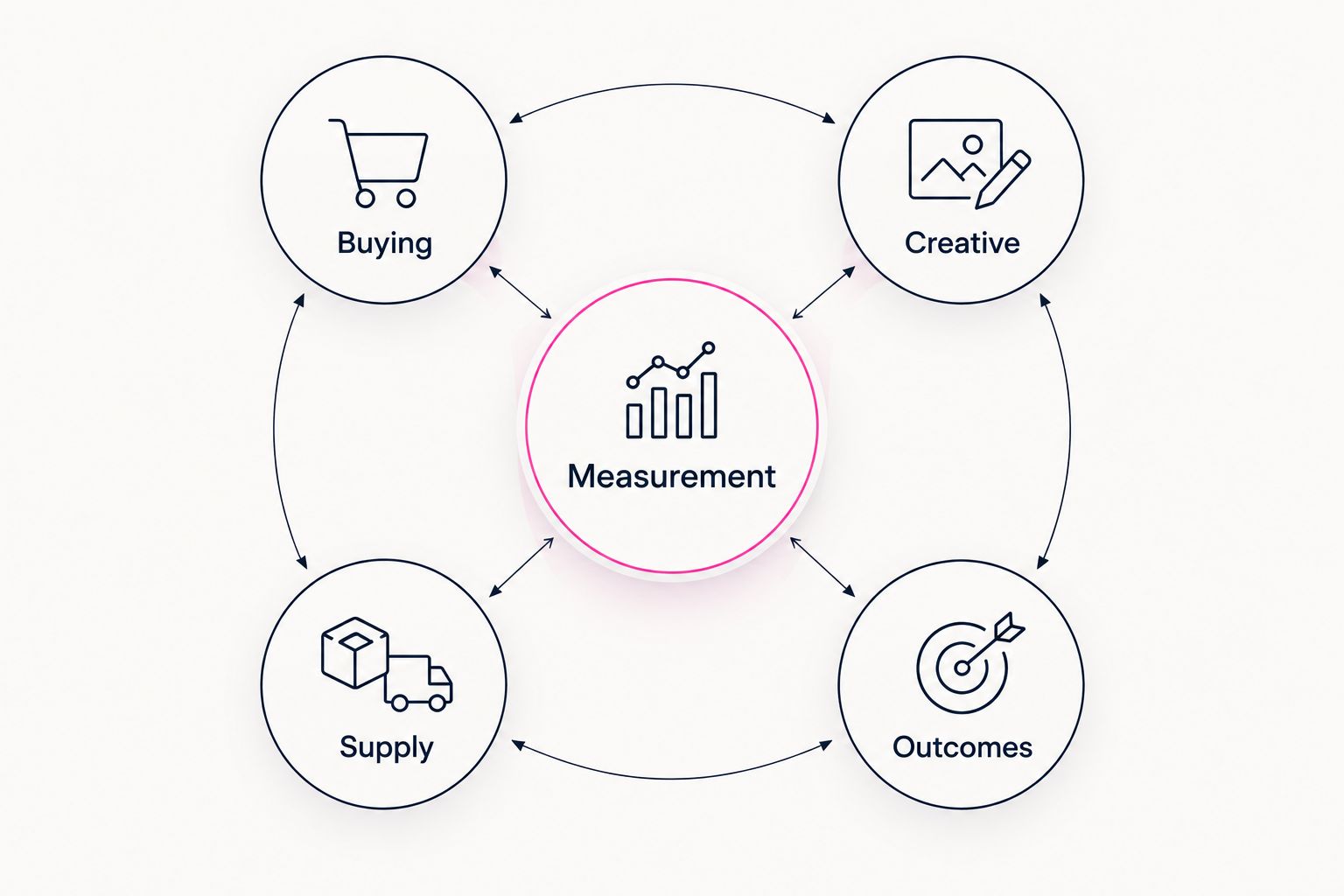
Attention measurement needs a defined decision in each part of the stack.
Treat compatibility as a requirement to establish, not a capability to assume. Ask about supported data exchange, reporting granularity, permissions and whether results arrive early enough to influence the next decision.
The distinction between reporting and activation is explained in how attention measurement integrates into a DSP. A demand-side platform, or DSP, buys programmatic inventory; receiving a report is not the same as using its signals during bidding.
For Cake.Shop enquiries, bring your current buying workflow, required formats and measurement question. That makes the discussion about ownership and implementation rather than an unsupported promise of a ready-made connection.
An attention metric answers a different question from a click metric. A person can look without clicking, and a click does not establish that the message was understood.
When assessing display advertising cost per click, keep click efficiency separate from attention quality: the former describes spend relative to clicks, while the latter depends on the provider's measurement method. Neither establishes incremental sales on its own.
For a 2026 evaluation, document an explicit hypothesis. An example is that changing placements while holding creative constant will improve the selected attention measure without weakening the advertiser's outcome metric.
Keep the comparison interpretable:
A data clean room can support controlled data collaboration, but using one does not by itself create an incrementality experiment. The experimental design still determines what conclusions you can draw.
Start with Lumen if your unresolved question is media planning informed by eye tracking. Choose Adelaide's evaluation route for placement scoring, Amplified Intelligence for human attention research, or DoubleVerify for attention considered alongside verification.
If you cannot name the decision the metric will change, wait. Adding another score before assigning ownership creates reporting work rather than a clearer buying process.
Cake.Shop is for brands and independent agencies assembling a modular programmatic advertising stack, not a substitute for a specialist attention measurement provider. Keep the stack decision and the measurement decision connected, but evaluate each on its own requirements.
What's the best attention measurement platform in 2026?
There is no universal winner across different attention methods. Shortlist Lumen for eye-tracking-informed planning, Adelaide for placement scoring, Amplified Intelligence for human attention research, and DoubleVerify for attention alongside verification.
Is attention measurement the same as viewability?
No. Viewability establishes an opportunity to see an ad under defined conditions; attention measurement assesses or predicts attention using a provider's particular method.
Does every attention platform use eye tracking?
No. Attention approaches include eye-tracking research, predictive models, and exposure or engagement signals. Ask which inputs produce the reported result and whether the result is observed or inferred.
Can I compare attention scores from different providers?
Do not treat different providers' attention scores as interchangeable. Compare their definitions, units, coverage and validation methods before drawing conclusions from the results.
Can attention measurement improve programmatic buying?
Attention measurement supports buying decisions when results connect to a defined planning or activation workflow. Establish whether the proposed implementation supports reporting, manual changes or an automated buying process.
Does higher attention prove that advertising caused more sales?
No. Higher attention does not establish incremental sales. Use an appropriate outcome study or experiment to test whether the advertising change caused the business result.
Should an independent agency replace its DSP with an attention platform?
No. A DSP buys programmatic media, while an attention platform measures or evaluates attention. Treat them as different components and establish compatibility before planning an integration.
Standard display viewability commonly requires at least 50% of an ad's pixels in view for 1 continuous second; the corresponding video duration is 2 continuous seconds. These Media Rating Council thresholds describe viewability, not proof of human attention.
Put those definitions beside your attention metric in the 2026 reporting template. That small distinction stops a qualified opportunity to see from being presented as evidence that someone actually looked.
Compare the best attention measurement platforms by use case. Choose a shortlist for eye tracking, placement scoring, research or verification in 2026.
Read more →Compare identity resolution platforms for retail media by use case. Shortlist for activation, enrichment or customer unification, then validate fit.
Read more →Compare data clean room platforms for agencies in 2026. Choose by client data, media access and reporting needs, with clear trade-offs for each option.
Read more →Book a 30-minute demo and see exactly how Cake.Shop works — no sales pitch, just the platform.