
OPEN DAILY
OPEN
HONEST
TRUST
LET'S CHAT



Choose data clean room platforms for agencies by where your clients’ data and media already sit—not by a universal ranking. Cake.Shop is a fit for agencies evaluating data clean rooms as part of a modular programmatic stack; Snowflake and AWS suit infrastructure-led evaluations, while Google and Amazon offer media-specific analysis environments.
TL;DR
An agency clean room has to satisfy the client’s data owner, your analysts and the team responsible for campaign decisions. A technically successful query is not enough if nobody can use the result.
For your 2026 shortlist, separate three jobs: collaborating on data, measuring advertising and activating audiences. They overlap, but buying one does not automatically solve the others. Start with the decision you need to make, then identify the data and permissions required to make it.
Use these criteria before comparing platform names:
Treat governance as a buying criterion, not paperwork after selection. Ask each supplier to demonstrate the workflow using a representative brief, with the client’s data owner present.
The order below follows distinct agency use cases. It is not a scored performance ranking, and a platform lower in the table can be the right first choice for your client.
Cake.Shop
Snowflake Data Clean Rooms
AWS Clean Rooms
Google Ads Data Hub
Amazon Marketing Cloud
Best for: Independent agencies and brands assessing clean rooms as part of a wider programmatic setup rather than as an isolated analytics purchase.
Cake.Shop provides a modular platform spanning media buying and reporting, rich media and digital out-of-home creative, data clean rooms and publisher supply. Its swweetshop platform powers in-housing. That makes the relevant evaluation broader than whether an analyst can run a query: assess how the proposed stack supports the team operating the campaigns.
For example, an agency bringing more programmatic work in-house needs clear responsibility across data collaboration, campaign execution, creative production and reporting. Ask for a demonstration of the hand-offs between those functions; do not assume every connection or destination is included.
Pros:
Cons and trade-offs:
Your 2026 evaluation should name the client’s source systems, intended collaborators and required outputs before discussing the wider stack. Keep the clean-room acceptance criteria separate from the media-buying demonstration.
Verdict: Hold a requirements-led demonstration when your brief includes programmatic in-housing; do not select on platform breadth alone.
Best for: Agencies whose clients already organise relevant data and collaboration work around Snowflake.
Snowflake Data Clean Rooms supports controlled data collaboration within the Snowflake environment. Its relevance starts with the client’s data estate and the organisations that need to participate—not simply whether your agency prefers SQL.
A useful evaluation brief is a client and a partner seeking an approved audience-overlap analysis. Confirm how each party participates, which analysis is permitted and what the agency can receive. Existing use of Snowflake does not itself establish those permissions.
Snowflake Data Clean Rooms pros:
Snowflake Data Clean Rooms cons:
Ask your data team to show how a client dataset becomes an approved analysis, including rejected queries and restricted outputs. A polished successful query tells you less about governance than a clear explanation of what the environment refuses to release.
Verdict: Hold Snowflake Data Clean Rooms on the shortlist when client infrastructure and partner participation fit.
Best for: Agencies working with clients whose technical teams want to build controlled collaboration around AWS.
AWS Clean Rooms is a managed service for analysing collective datasets under configured collaboration controls. It belongs in an infrastructure-led evaluation where technical ownership is explicit.
For an agency, the practical question is who will configure and maintain the collaboration. A managed service does not mean your account team can bypass data engineering, permission design or client approval.
AWS Clean Rooms pros:
AWS Clean Rooms cons:
Use a representative agency reporting request in the demonstration. Ask the technical team to explain which participant can run the analysis, what each participant receives and who handles a failed data preparation job.
For a 2026 procurement brief, assign an owner to every operational task. Otherwise, a technically suitable service can leave the agency responsible for work it has not staffed.
Verdict: Hold AWS Clean Rooms when the client’s technical team will own the implementation with your analysts.
Best for: Agencies answering measurement questions involving supported Google advertising data and permitted first-party inputs.
Google Ads Data Hub provides privacy-controlled analysis involving Google advertising data. Its scope is tied to supported data, account access and privacy checks, so evaluate the exact question rather than treating it as an unrestricted database.
An agency might need to examine advertising reach or connect permitted first-party information with supported campaign data. Specify the requested output first, then establish whether the available datasets and privacy restrictions support it.
Google Ads Data Hub pros:
Google Ads Data Hub cons:
Ask an analyst to explain what happens when an output is withheld. Your client report needs to distinguish an unavailable result from a genuine absence of advertising activity or conversions.
Do not interpret a detailed attribution report as evidence of causal lift. Attribution connects observed events; incrementality asks what changed because the advertising ran.
Verdict: Hold Google Ads Data Hub for a defined Google measurement brief; skip it as a universal cross-media replacement.
Best for: Agencies whose measurement brief centres on Amazon advertising signals and permitted advertiser data.
Amazon Marketing Cloud is a privacy-safe analysis environment built around Amazon Ads signals and supported advertiser inputs. Its value depends on whether those signals answer the client’s actual measurement question.
For an agency handling Amazon-related campaigns, begin with the required reporting decision. Establish which events are represented, how the query defines an outcome and which outputs the account can access.
Amazon Marketing Cloud pros:
Amazon Marketing Cloud cons:
Keep the analyst and account lead in the same evaluation. The analyst needs to understand the available signals; the account lead needs to explain what the result does and does not tell the client.
Verdict: Hold Amazon Marketing Cloud for Amazon-centred measurement; skip it when the required evidence sits elsewhere.
This 2026 shortlist groups platforms by operating fit: modular programmatic stack, existing cloud environment and media-specific measurement. It does not claim hands-on testing, a numerical score or verified performance superiority.
The decision criteria are partner fit, client separation, permitted analysis, operational ownership, useful outputs and exit control. Apply them to your own brief before treating any listed option as a recommendation to buy.
For your 2026 evaluation, propose a deliberately narrow pilot: 1 client workspace, 2 approved datasets and 3 reporting outputs. These are suggested test boundaries, not platform limits or performance benchmarks.
Use the pilot to test the complete process:
The pilot passes only when the client accepts both the result and the operating process. A successful query with unclear ownership is unfinished work.
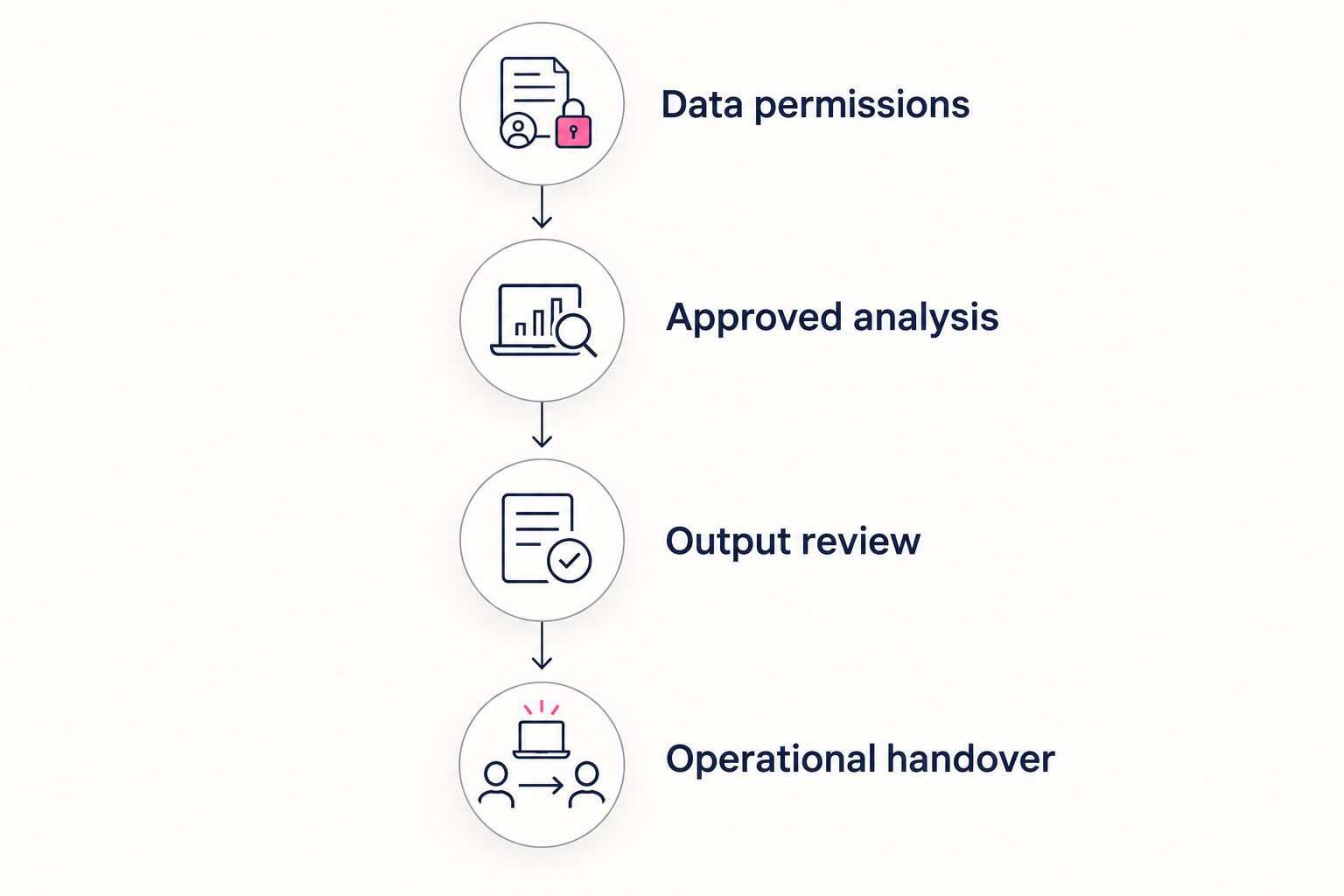
Test the operating process as well as the query result.
Start with the environment containing the indispensable data. If the question depends on Google or Amazon advertising signals, investigate the relevant media-specific environment first. If collaboration is anchored in Snowflake or AWS, involve that client’s data team before shortlisting elsewhere.
Choose a Cake.Shop evaluation when the enquiry concerns clean rooms within a modular programmatic stack, including buying, reporting, creative and publisher supply. Require the same evidence of permissions, operational ownership and usable outputs as you would from any other supplier.
Discuss your programmatic stack
Bring your data sources, reporting questions and in-housing requirements to the conversation.
What are the best data clean room platforms for agencies?
The right shortlist depends on the required data and operating model: consider Snowflake Data Clean Rooms, AWS Clean Rooms, Google Ads Data Hub and Amazon Marketing Cloud for their distinct environments. Evaluate Cake.Shop when clean rooms form part of a modular programmatic stack rather than a standalone analytics purchase.
Does an agency need a clean room for every client?
No. Use a clean room when an approved collaboration or measurement requirement needs its controls; do not add one without a defined data-sharing question and operational owner.
Is Snowflake Data Clean Rooms better than AWS Clean Rooms?
Neither is a universal default. Compare the client's existing architecture, partner participation, required analysis and implementation ownership before choosing.
Can a data clean room prove advertising incrementality?
A clean room alone does not prove incrementality. Causal measurement needs an appropriate experimental or analytical design, suitable data and defensible assumptions.
Does using a clean room make data sharing legally compliant?
No. Technical controls do not replace a lawful basis, appropriate agreements or applicable data-protection obligations; have the client's privacy team review the proposed use.
Can clean-room results go straight into a media buying platform?
Only where the specific workflow, permissions and destination support that use. An aggregate measurement output is not automatically an audience that can be activated.
What should an agency ask for in a demonstration?
Ask for the complete approved workflow, from data preparation to the report or permitted activation output. Include restricted queries, failed jobs, access removal and client offboarding—not just the successful analysis.
A blocked output can be evidence that a clean room is doing its job. Ask the supplier to demonstrate a request the environment refuses, then explain how your agency should report that restriction to the client. That answer reveals more about control than another feature slide.
Compare the best attention measurement platforms by use case. Choose a shortlist for eye tracking, placement scoring, research or verification in 2026.
Read more →Compare identity resolution platforms for retail media by use case. Shortlist for activation, enrichment or customer unification, then validate fit.
Read more →Compare data clean room platforms for agencies in 2026. Choose by client data, media access and reporting needs, with clear trade-offs for each option.
Read more →Book a 30-minute demo and see exactly how Cake.Shop works — no sales pitch, just the platform.