
OPEN DAILY
OPEN
HONEST
TRUST
LET'S CHAT



Best for browser-side control: Prebid.js. Best for server-side Prebid auctions: Prebid Server. Best for publisher-managed Amazon integrations: Amazon Transparent Ad Marketplace. Best for Google Ad Manager workflows: Google Open Bidding. This 2026 guide compares the best header bidding platforms by architecture and operational fit, separating publisher auction infrastructure from buying-side tools.
TL;DR
Header bidding lets publishers request bids from multiple demand sources before the ad server makes its final selection. A wrapper coordinates those requests; a supply-side platform, or SSP, represents publisher inventory to buyers. They are different parts of the stack.
For agencies and brands, choosing the publisher's wrapper is rarely the immediate decision. Understanding the auction path matters when assessing inventory access, reporting and who controls the transaction. Cake.Shop serves brands and independent agencies building modular advertising stacks; header bidding belongs on the publisher side of that conversation.
A header bidding platform coordinates competition for inventory; a demand-side platform buys that inventory. Confusing the two produces a shortlist that answers the wrong question.
For this 2026 shortlist, architectural fit takes priority over unsupported claims about revenue or speed. Assess these criteria before comparing vendor presentations:
These criteria produce distinct recommendations, not a universal winner. A technically capable publisher and an agency evaluating publisher supply need different answers from the same comparison.
Prebid.js
Prebid Server
Amazon Transparent Ad Marketplace
Google Open Bidding
Prebid.js and Prebid Server are software projects, not interchangeable managed services. Amazon Transparent Ad Marketplace and Google Open Bidding are platform programmes. Compare the responsibility each option leaves with your team, not just the names in the table.
Prebid.js is an open-source header bidding wrapper that runs in the browser. It requests bids through configured bidder adapters and passes bid information into your ad-serving workflow. Publishers choose the integrations and configuration they implement.
Best for: Publishers with engineering support who want direct control over a browser-side header bidding implementation.
A useful evaluation starts with a page your team can inspect. Follow an ad unit from the bid request to the ad-server decision, then check how consent, timeouts and missing responses affect the result. That exposes operational gaps a feature checklist will miss.
For a 2026 implementation, treat the wrapper as production software. Specify who approves adapter changes, how releases are tested and how auction errors are investigated. An open-source licence does not supply an operating team.
Verdict: Buy into Prebid.js when browser-side control is the priority and engineering ownership is explicit.
Prebid Server runs auctions on server infrastructure and connects to demand sources through server-side bidder adapters. It can work alongside Prebid.js; choosing server-side execution does not mean every browser-side component disappears.
Best for: Publishers that want server-side Prebid auction execution and can assign responsibility for hosting or a hosting provider.
The important distinction is where the demand calls happen. Moving calls away from the browser changes the implementation, but it does not automatically resolve identity, consent, reporting or ad-server integration. Each still needs a clear design.
Ask a prospective host to explain how your team investigates an auction failure. Who can inspect the request, identify the responding bidder and reconcile the result with the ad server? A server-side architecture without accessible diagnostics leaves a critical operational gap.
Verdict: Buy into Prebid Server when server-side execution solves a defined requirement and hosting ownership is settled.
Amazon Transparent Ad Marketplace, commonly called TAM, is part of Amazon Publisher Services. It supports server-side bidding with participating SSPs while publishers manage their own SSP relationships. That relationship model distinguishes TAM from treating Amazon's publisher offerings as one interchangeable service.
Best for: Publishers that want an Amazon Publisher Services integration while retaining responsibility for participating SSP relationships.
Evaluate TAM against your existing demand setup, not against the Amazon name alone. Identify which relationships you intend to connect, how bid information reaches the ad server and which party handles discrepancies. The integration and the commercial relationship need separate owners.
For your 2026 shortlist, ask for a walkthrough using your intended inventory and demand partners. Focus on the transaction path and reporting responsibilities. Do not treat an integration label as evidence that every existing partner or workflow fits.
Verdict: Buy into Amazon Transparent Ad Marketplace when its server-side integration matches your publisher-managed SSP model.
Google Open Bidding allows eligible third-party exchanges to compete through server-to-server bidding in Google Ad Manager. It belongs in this comparison because publishers assess it alongside header bidding, but it is not a browser-side header bidding wrapper.
Best for: Publishers whose operating model centres on Google Ad Manager and who want exchange competition within that environment.
The practical question is whether an integrated workflow matters more than independently managing a wrapper. Open Bidding and Prebid are not simply different interfaces for the same architecture. Your team needs to understand where configuration, auction execution and reporting sit.
Choose Open Bidding for workflow fit, not because its inclusion here makes it identical to header bidding. A publisher can evaluate multiple auction routes, but overlapping routes need explicit configuration and measurement rather than an assumption that more connections are better.
Verdict: Buy into Google Open Bidding when Google Ad Manager-centred operation is the requirement; skip it as a substitute for independent wrapper control.
This 2026 ranking uses architectural fit: execution location, implementation ownership, demand relationships and ad-server workflow. The technical distinctions follow the official Prebid.js and Prebid Server documentation, Amazon Publisher Services' TAM documentation, and Google Ad Manager's Open Bidding documentation.
The order starts with direct browser-side wrapper control, then server-side Prebid execution, publisher-managed Amazon integrations and Google-integrated exchange competition. It does not rank measured revenue, latency or service quality. Those require a controlled evaluation using your inventory and operating conditions.
A useful proof of concept tests responsibility as well as bidding. Build the evaluation around a small, documented inventory scope so your team can explain each outcome without relying on aggregate reporting alone.
These are recommended test boundaries, not performance benchmarks. Keep other configuration changes controlled so the evaluation answers a specific question rather than becoming a general site rebuild.
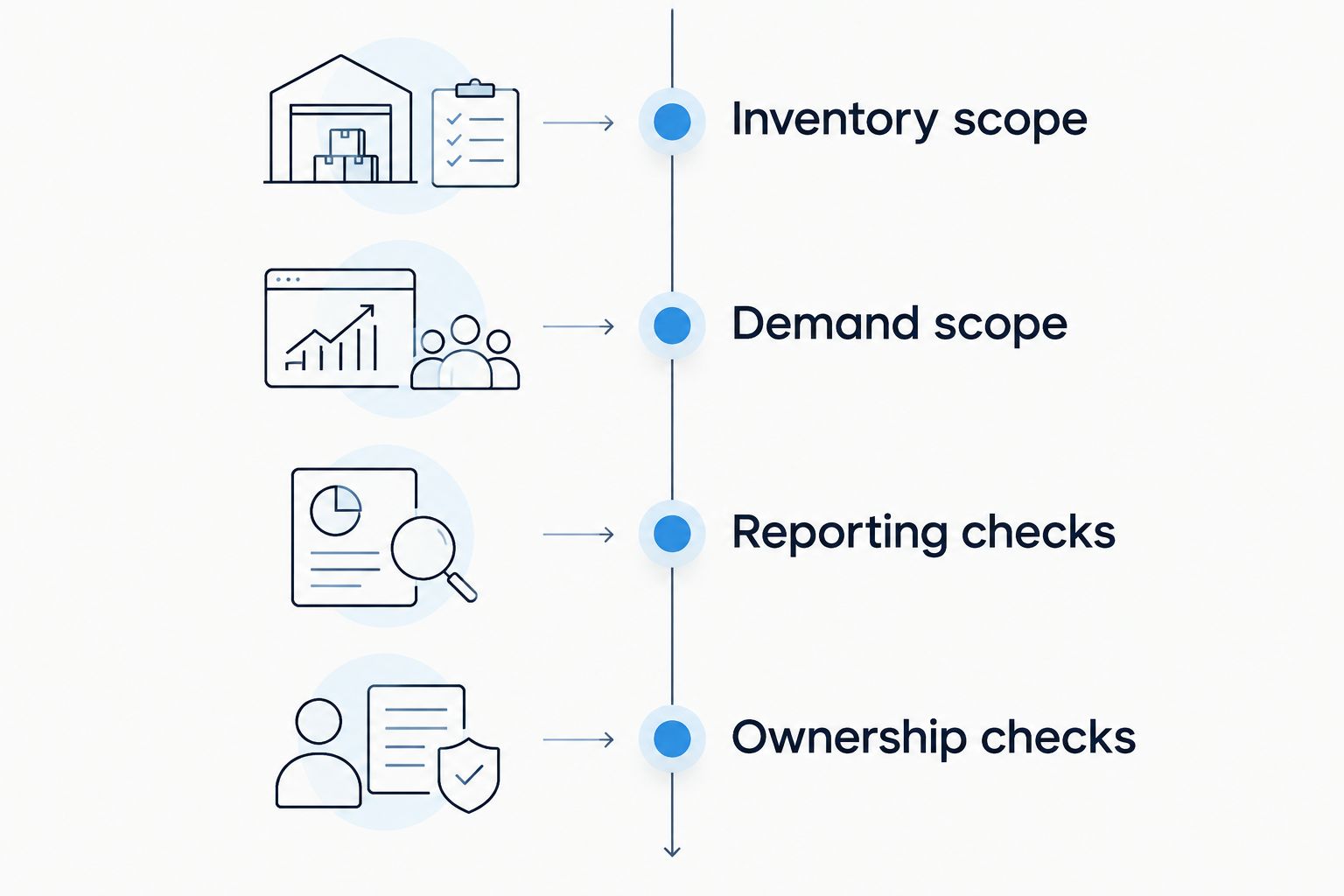
Test the auction path and its ownership before expanding the implementation.
Write acceptance criteria before the demonstration. Require evidence that the intended partners receive requests, bid information reaches the ad server, consent settings behave as designed and reporting differences can be explained. Reject a demonstration that only shows a final revenue chart.
Cake.Shop's role in a header bidding evaluation is the wider advertising stack, not a claimed wrapper implementation. Its stated offering combines modular media buying and reporting, rich media and DOOH creative, data clean rooms, and publisher supply. DOOH means digital out-of-home advertising.
For an independent agency, that creates a different enquiry: how should buying, creative, data collaboration and supply fit together? For a brand bringing programmatic in-house, the question becomes who owns each component and how reporting supports the operating model.
Cake.Shop serves brands and independent agencies that need a modular programmatic advertising stack. Keep that buyer-side requirement separate from the publisher's choice of auction software. A product demonstration should explain the connections between modules without assuming capabilities from the category label.
Start with Prebid.js if your undecided publisher team wants browser-side control and can maintain the implementation. Choose Prebid Server when server-side Prebid execution is the actual requirement, TAM when publisher-managed SSP relationships fit the Amazon integration, and Open Bidding when Google Ad Manager-centred operation is the priority.
For a 2026 agency or brand shortlist, start somewhere else: media buying, creative, data and supply requirements. Header bidding knowledge helps you question the supply path; it does not turn a publisher wrapper into a buying platform.
What's the best header bidding platform for a publisher?
Prebid.js is the strongest fit in this architecture-based shortlist for publishers prioritising browser-side control and engineering ownership. Prebid Server, Amazon Transparent Ad Marketplace and Google Open Bidding address different server-side or platform-integrated requirements.
Is Prebid.js the same as Prebid Server?
No. Prebid.js runs in the browser, while Prebid Server executes auctions on server infrastructure. They can work together, so evaluate execution location separately from the rest of the integration.
Is Google Open Bidding actually header bidding?
Google Open Bidding is server-to-server exchange competition within Google Ad Manager, not a browser-side header bidding wrapper. Publishers compare it with header bidding because both affect how demand competes for inventory.
Who should choose Amazon Transparent Ad Marketplace?
Amazon Transparent Ad Marketplace fits publishers seeking its server-side integration while managing their own participating SSP relationships. Evaluate the intended demand connections, ad-server workflow and reporting responsibilities before selecting it.
Does server-side bidding always perform better?
No architecture guarantees better commercial results for every publisher. Evaluate the intended inventory, identity setup, demand connections and reporting rather than treating server-side execution as a performance claim.
Is Cake.Shop a header bidding wrapper?
Cake.Shop's stated offering is a modular programmatic advertising platform covering media buying, creative, data clean rooms and publisher supply. That description does not establish a header bidding wrapper capability.
What should an agency ask about header bidding?
Ask which auction path provides access to the publisher's inventory, who controls that path and how transactions are reported. Then assess the buying platform separately against campaign, creative, data and supply requirements.
More bidder connections are not a complete evaluation strategy. Before adding another integration, make your team explain one existing path from request to delivery, including who handles a discrepancy. If that explanation stops at a dashboard, fix the visibility before expanding the stack.
Compare the best header bidding platforms by auction control, server-side setup and publisher fit. Choose a stack that suits your team, not a sales pitch.
Read more →Compare the best first-party data activation platforms by fit: warehouse activation, CDPs, identity and media buying. Choose the layer your advertising stack needs.
Read more →Compare the best ad verification and brand safety tools by use case. Choose your 2026 shortlist for fraud, viewability, video suitability and supply checks.
Read more →Book a 30-minute demo and see exactly how Cake.Shop works — no sales pitch, just the platform.