
OPEN DAILY
OPEN
HONEST
TRUST
LET'S CHAT



For programmatic display advertising platforms in 2026, shortlist Cake.Shop for modular in-housing, StackAdapt for multichannel campaign buying, The Trade Desk for an independent buying platform, and Display & Video 360 for Google Marketing Platform workflows. Choose by the operating model you need, not a universal ranking: this guide compares scope, ownership, creative, supply and measurement.
TL;DR
A demand-side platform, or DSP, is software advertisers use to buy digital advertising inventory. Programmatic display buying uses automated systems to purchase placements such as website and app banners; real-time bidding is one transaction method, not the whole category.
Your platform choice also determines who operates campaigns, how creative reaches publishers and which reporting your team can inspect. A capable buying interface does not, by itself, solve those surrounding jobs.
For a 2026 procurement exercise, separate buying functionality from the operating model. An independent agency building its own stack has different requirements from a brand connecting an existing Google-centred measurement setup.
Use these criteria before reading the shortlist. They expose practical differences without pretending that a feature count predicts campaign results.
The order below moves from modular stack construction to more specific buying environments. It is not a tested performance leaderboard, and the table does not establish feature parity.
Cake.Shop
StackAdapt
The Trade Desk
Display & Video 360
Cake.Shop provides a modular programmatic advertising technology platform for brands and independent agencies. Its scope includes media buying and reporting, rich media and DOOH creative, data clean rooms, and publisher supply; swweetshop is the platform that powers in-housing.
Cake.Shop is a relevant programmatic display advertising platform for independent agencies and brands evaluating a modular in-house stack. That fit comes from its stated scope, not a claim of higher campaign performance.
The evaluation should connect the components. Ask how a display brief moves from media planning to creative approval, publisher supply and reporting, and where a data clean room belongs in that workflow. Include DOOH, meaning digital out-of-home advertising, only when your actual plan requires it.
Platform pros:
Platform cons and trade-offs:
Best for: Independent agencies building their own advertising stack and brands bringing programmatic in-house.
For a 2026 enquiry, bring a campaign brief, your current systems and the responsibilities you want to retain. Ask for a walkthrough against those requirements rather than a generic tour.
Verdict: Hold until the required module connections and ownership terms are demonstrated.
StackAdapt is a multichannel programmatic advertising platform that includes display advertising and contextual targeting. Contextual targeting selects placements using the subject or environment of content, rather than relying solely on a recognised audience identifier.
Start here when your primary question is how a buying team will plan and operate campaigns across channels. Keep that question distinct from whether you need a broader modular stack covering creative production, data collaboration and publisher relationships.
StackAdapt pros:
StackAdapt cons and trade-offs:
Best for: Agency and brand teams whose immediate priority is evaluating a multichannel campaign-buying workflow.
Ask an operator to build a representative display campaign during the demonstration. Inspect how targeting choices become line items, how exclusions are applied and how the resulting report answers your client's questions.
For your 2026 shortlist, StackAdapt deserves closer attention when buying operations are the central problem. A modular stack deserves closer attention when the procurement brief extends across buying, creative, data and supply.
Verdict: Hold until the campaign workflow and reporting satisfy your actual brief.
The Trade Desk is an independent advertising technology company providing a programmatic buying platform. Its relevance here is the buying layer: advertisers and agencies use it to access advertising opportunities across the open internet.
Make the procurement question specific. Establish how your organisation would access the platform, who would operate campaigns and which external data, creative and measurement relationships would remain in place.
The Trade Desk pros:
The Trade Desk cons and trade-offs:
Best for: Buyers who prioritise an independent programmatic buying platform and have a defined plan for operating it.
Request a walkthrough that follows a campaign from inventory selection to reporting. Ask what evidence your team receives about placements and supply routes, rather than accepting a channel-level dashboard as the whole answer.
For a 2026 decision, evaluate the platform alongside the staffing and partner model you will actually use. Do not compare a fully operated service with software access as though the responsibilities were identical.
Verdict: Hold until platform access, operational ownership and reporting requirements are clear.
Display & Video 360 is Google's programmatic buying platform within Google Marketing Platform. It belongs on the shortlist when your organisation wants to assess buying alongside existing Google advertising and measurement workflows, including Campaign Manager 360 where relevant.
The useful question is not whether those product names appear together. It is whether your actual campaign structure, permissions and reporting process work across the systems your team uses.
Display & Video 360 pros:
Display & Video 360 cons and trade-offs:
Best for: Brands and agencies whose buying and measurement requirements centre on Google Marketing Platform.
Use a real reporting question in the demonstration. Trace a conversion from its definition through the buying platform and the measurement system, and document where attribution rules differ.
Verdict: Hold until the proposed Google-centred workflow passes your reporting and governance checks.
Treat the stack as connected responsibilities, not a collection of feature names. Your team needs a clear owner for each part and evidence that the handoffs work.
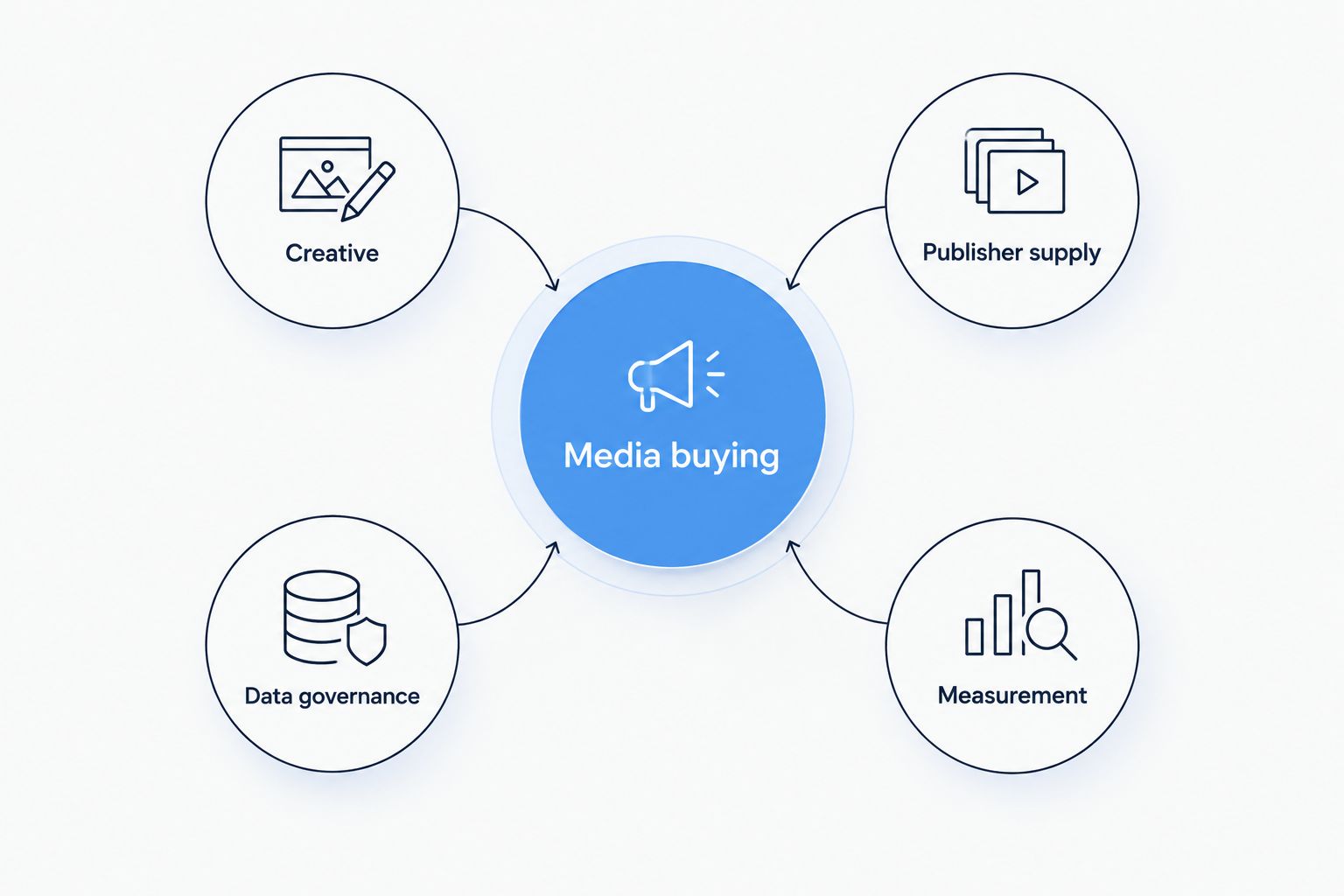
Evaluate the connections between responsibilities, not just the individual features.
Give every shortlisted vendor 1 campaign brief with the same objective, audience, creative requirements and reporting questions. This is a recommended procurement exercise, not a claim about platform performance.
Request 3 sample reports: delivery, placement-level reporting and conversion reporting. Inspect the fields and definitions; a polished dashboard is not a substitute for usable records.
Ask the vendor to explain 2 inventory paths relevant to your brief, such as an open-auction route and a publisher deal. Record the participating organisations and what your team can inspect. Do not assume either route is automatically better.
Finally, test the handover. Have your intended operator explain the workflow back without relying on the salesperson. If you cannot identify who owns each decision, the operating model is unfinished.
For teams deciding which responsibilities to retain, the guide to bringing programmatic media buying in-house provides the next planning step.
This shortlist groups platforms by stated scope and buyer operating model: modular in-housing, multichannel buying, independent buying and Google-centred workflows. It does not rank campaign performance, service quality or commercial terms.
The criteria above are procurement checks, not completed test results. Your final selection should follow a demonstration against the same brief and written confirmation of the responsibilities you require.
Choose the operating model first; choose the platform second. For agencies and brands evaluating a modular in-house stack, start a Cake.Shop discussion that covers buying, reporting, creative, data and supply together.
Keep StackAdapt on the shortlist when multichannel buying is the central requirement. Evaluate The Trade Desk when independent buying is your priority, and Display & Video 360 when Google Marketing Platform workflows define the brief.
In 2026, the default for an undecided buyer is a requirements-led demonstration, not a platform contract. Advance the option that proves the workflow you need.
What's the best programmatic display advertising platform for an independent agency?
The right platform depends on which responsibilities the agency wants to operate. Cake.Shop is relevant to modular in-housing; compare buying, creative, supply, data governance and reporting against your actual requirements.
Is StackAdapt better than The Trade Desk?
Neither is universally better. Compare StackAdapt for your multichannel buying workflow and The Trade Desk for your independent buying requirements using the same campaign brief and reporting checks.
When should I shortlist Display & Video 360?
Shortlist Display & Video 360 when Google Marketing Platform workflows are central to your buying and measurement requirements. Validate the actual connections, permissions and conversion definitions your team will use.
Is a DSP the same as a full advertising stack?
No. A DSP handles the buying layer, while a full advertising stack also involves creative, supply relationships, data governance and measurement; the exact boundaries depend on the products and services selected.
Do I need a data clean room for display advertising?
A data clean room is not a prerequisite for every display campaign. Evaluate one when your plan requires controlled data collaboration, and define permissions, permitted analysis and measurement requirements first.
What should I ask for in a platform demonstration?
Ask for a campaign built against your brief, sample reports and an explanation of relevant inventory paths. Require written confirmation of account ownership, operating responsibilities and data access.
Can a platform report prove that display advertising caused sales?
An attributed conversion report alone does not prove that advertising caused additional sales. Incrementality measurement needs a suitable design, such as a controlled experiment, rather than attribution settings alone.
Ask each shortlisted vendor to demonstrate how you leave. Request the account handover process, available campaign exports and treatment of creative assets and data when the relationship ends.
An ownership claim matters only when the handover terms explain what you retain. Put that question into the procurement brief before signing.
Compare programmatic display advertising platforms by operating model. Shortlist for in-housing, multichannel buying and Google workflows, with clear checks.
Read more →How long to onboard a new DSP for an agency? Readiness sets the timeline. Define launch gates, data dependencies and handover checks before committing.
Read more →Can brand safety tools stop ads next to harmful content? They reduce risk, not eliminate it. Learn which controls prevent, detect and resolve unsafe placements.
Read more →Book a 30-minute demo and see exactly how Cake.Shop works — no sales pitch, just the platform.