
OPEN DAILY
OPEN
HONEST
TRUST
LET'S CHAT


Rich media ad creative is priced against the production brief, not a universal rate: the interaction, asset preparation, versions and testing determine what you need quoted. Treat production separately from media spend, and ask whether the quote includes platform access, ad serving, revisions and editable files before you approve it.
TL;DR
The useful comparison is the cost of delivering the same approved scope—not the headline figure on different proposals. For a 2026 brief, ask suppliers to quote against identical assets, formats, interactions, version requirements and acceptance criteria.
Start with the deliverable. An animated banner, an expandable unit and a creative fed by changing product data are different production jobs. Calling all of them rich media does not make their estimates comparable.
Use the rich media ad creative platform guide to frame platform selection, then separate the following work in your production brief.
Concept and design
Asset preparation
Creative build
Versioning
Testing and delivery
Handover
A quote that covers only design and build is not equivalent to one that also covers adaptation, testing and handover. Compare included responsibilities before comparing totals. Otherwise, your apparent production saving can simply be work transferred to your own team.
Rich media sits between creative production and campaign delivery. A design can receive brand approval while still needing technical changes for its intended placement.
For independent agencies, that creates a scoping problem: the client approves an idea, but the team must also deliver usable files and measurable interactions. For brands bringing programmatic in-house, it creates an ownership question: who can update the creative after launch?
Your 2026 buying decision should cover both. Specify the experience you want the audience to have, then specify how your team will operate it.
Template-based production starts from an existing structure. It suits campaigns where the message and assets change but the layout and interaction remain consistent.
The advantage is a defined starting point. Your team can assess whether the structure fits before commissioning a custom interaction; the limitation is that your concept must work within that structure.
Ask to see the actual template with representative assets. Check text wrapping, image cropping and the intended call to action rather than approving an empty demonstration.
Choose a template when the existing structure fits the brief. Do not commission extensive modifications merely to preserve the label of a template-based build.
Bespoke production suits a brief that requires behaviour an existing template does not provide. Examples include a custom product exploration sequence or an interaction designed around a particular campaign concept.
The benefit is control over the specified experience. The trade-off is that the interaction needs its own design decisions, build requirements and acceptance tests.
Describe what happens before and after each action. If someone expands, swipes or selects an item, state what changes, which destination opens and which event should be recorded.
Choose a bespoke build because the interaction serves the campaign—not because custom sounds more impressive. Approve the behaviour before detailed production begins.
Dynamic creative changes content according to defined data or rules. That makes the data source and decision logic part of the production scope, not an administrative detail to resolve at launch.
A reusable layout supports changing messages, but someone must define valid inputs and fallback behaviour. A missing image, overlong headline or unavailable feed needs an agreed response.
Ask who maintains the input data, who approves changes and who tests the resulting combinations. Do not assume that delivering a feed means the creative is ready to accept it.
Choose dynamic creative when changing content is an operational requirement. A fixed message does not need a data dependency simply to qualify as advanced creative.
Template-based
Bespoke
Dynamic
These approaches can overlap. A dynamic campaign can use a template, and a bespoke build can include changing content. Ask suppliers to describe the work involved rather than treating the labels as fixed production tiers.
The scope drivers below explain what to resolve before asking for a final proposal. None requires you to guess a market-average production figure.
A useful 2026 proposal names these assumptions explicitly. If a requirement changes, both parties can identify the affected work instead of debating whether it was implied.
Use a short approval sequence that makes creative, technical and operational decisions visible. Freeze the acceptance criteria before the final build—not after the campaign team receives the files.
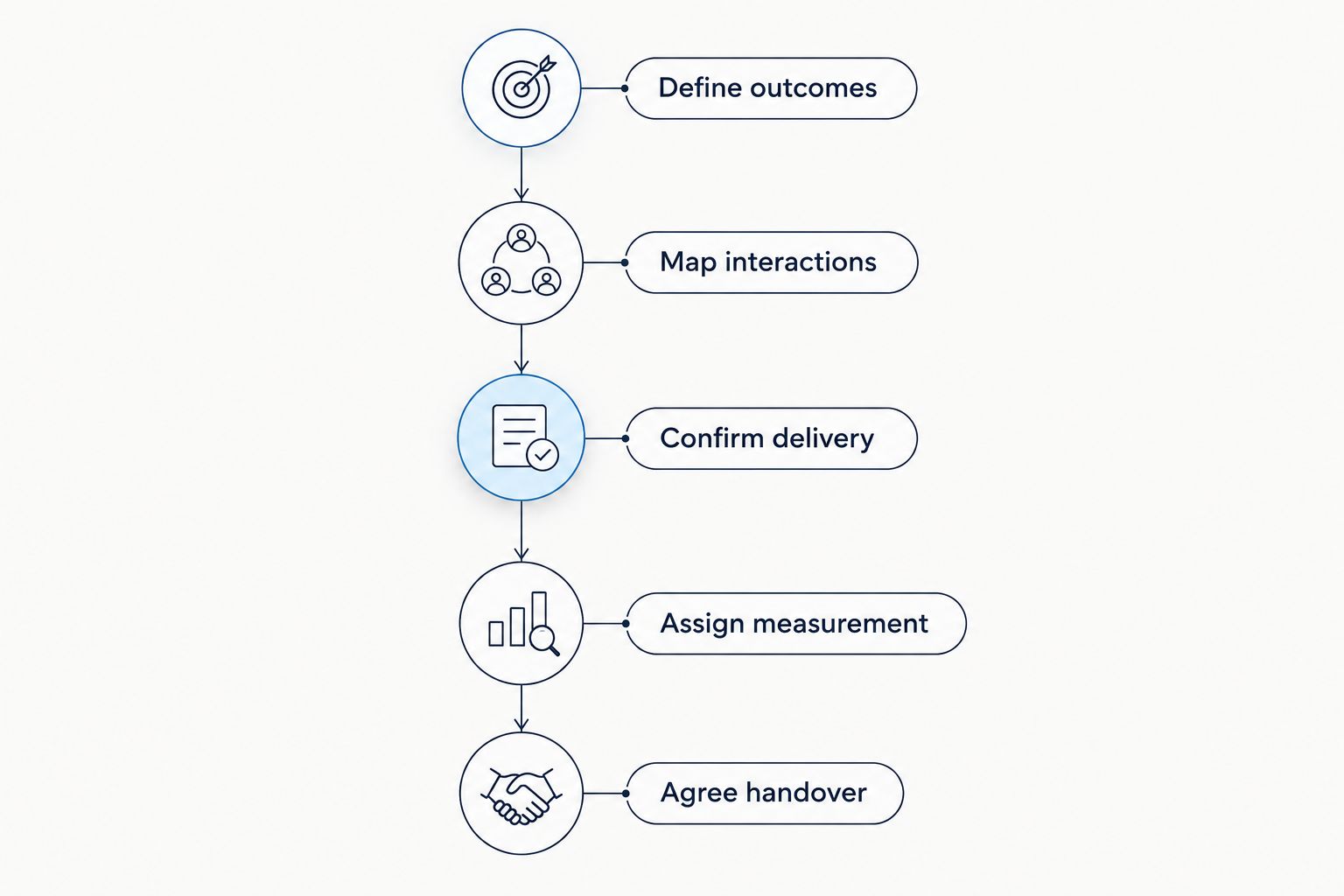
Resolve delivery, measurement and ownership before approving the final build.
Keep one approved brief as the reference for all suppliers. If a proposal excludes a requirement, ask for the exclusion to be stated against that requirement rather than buried in general terms.
Your 2026 campaign budget should distinguish creating an ad from distributing and operating it. Ask for separate descriptions of production, platform access, ad serving, media buying and campaign management wherever those services apply.
Media spend buys advertising exposure; production creates the material being shown. Ad serving concerns delivery and tracking, while a creative platform concerns the environment used to build or manage the unit. Check how each supplier packages these responsibilities.
Do not assume that a production handover includes ongoing editing access. Equally, do not assume that access to a platform includes someone designing, building and testing the campaign for you.
Budget ownership matters as much as file ownership. Give each workstream an accountable person so changes do not fall between the creative supplier, media team and publisher.
Cake.Shop is a modular programmatic advertising platform for independent agencies and brands bringing programmatic in-house. Its scope includes media buying and reporting, rich media and DOOH creative, data clean rooms, and direct publisher supply—not just a standalone buying tool.
Cake.Shop introduces swweetshop as the platform that powers in-housing. For a rich media enquiry, discuss the creative requirement alongside buying, reporting and supply so the proposal addresses how your team will operate the campaign.
The relevant benefit of evaluating a full stack is the ability to discuss those responsibilities together. The trade-off is that a broader evaluation also needs decisions about access, ownership and internal responsibilities; a narrowly scoped production job does not automatically require a full-stack change.
When you explore Cake.Shop, bring the brief, delivery requirements and ownership questions. Ask which modules address the requirement and what remains your team's responsibility.
Remove unnecessary variation before removing testing. Standardise the elements that do not need to change, and preserve the parts that make the message clear and the interaction usable.
For a 2026 brief, challenge every requested adaptation: does it serve a distinct placement, audience or message? If not, remove it from the production scope rather than asking a supplier to absorb undefined work.
Reuse an approved layout when it still fits. Keep reusable assets organised and name the person authorised to approve changes; conflicting feedback creates a different problem from a difficult build.
Rich media production and media spend are separate workstreams. A supplier can package them together, but the proposal should still explain what is being created and what advertising delivery is being purchased.
Ask for the same separation when reviewing platform access and campaign management. That keeps the production decision distinct from the media allocation.
Creative ownership and editing rights depend on the agreement. Specify source files, reusable assets, third-party licences, account access and permissions before commissioning production.
An exported ad is not the same deliverable as an editable project. If your in-house team will make future changes, include that requirement in the acceptance criteria.
How much does rich media ad creative cost to produce?
Rich media ad creative is quoted against the production scope, including interaction, assets, versions and testing. Request an itemised proposal and separate production from media spend and ongoing platform services.
Is template-based rich media the right choice for my campaign?
Template-based rich media suits campaigns whose layout and interaction fit an existing structure. Review the template with representative copy and images before approving it.
When should I commission bespoke rich media creative?
Commission bespoke rich media when the campaign needs a specific interaction that an existing template cannot support. Define the behaviour and acceptance tests before the build begins.
Does dynamic creative require extra planning?
Dynamic creative requires agreed data inputs, content rules and fallback behaviour. Assign responsibility for maintaining the data and checking how the creative handles invalid inputs.
Does a rich media production quote include revisions?
Revision coverage depends on the proposal. Ask suppliers to distinguish corrections against the approved brief from changes to the concept, assets or interaction.
Can my in-house team update the ads after delivery?
Your in-house team needs the appropriate editable files, permissions and access to update the ads. Make those handover requirements part of the agreement rather than assuming an exported ad includes them.
What should I send a supplier for an accurate quote?
Send the concept, assets, interactions, version list, delivery specifications, measurement requirements and handover expectations. Use the same brief for each supplier so proposals cover comparable work.
Ask every supplier to explain what your team receives when the engagement ends. A working ad, an editable project and the right to reuse its components are different deliverables.
Put the handover in the brief before asking for the quote. That makes ownership part of the production decision instead of an argument after delivery.
How much does it cost to in-house a DSP? Budget beyond platform fees: compare staffing, creative, data and operating models before approving your plan.
Read more →How much does rich media ad creative cost to produce? Scope sets the quote. Compare build types, hidden costs and ownership before you brief a supplier.
Read more →Can dynamic creative optimisation improve conversion rates? Yes, when tested against a control. Learn what to measure, compare and check before scaling.
Read more →Book a 30-minute demo and see exactly how Cake.Shop works — no sales pitch, just the platform.