
OPEN DAILY
OPEN
HONEST
TRUST
LET'S CHAT



No. A data clean room is not necessary for GDPR compliance: the GDPR requires lawful processing, accountability and appropriate safeguards, not a particular advertising technology. A clean room can restrict data access and analysis, but it does not replace a lawful basis, transparency, valid contracts or individuals’ rights.
TL;DR
Buying privacy technology and establishing legal permission are different jobs. For your 2026 advertising plans, start with what you intend to do with people’s data, then decide which controls that activity needs.
An agency matching a client’s customer records against publisher audiences faces questions about purpose, permissions and responsibility before any matching begins. The data clean room guide for media agencies addresses the operational setting; the compliance decision starts with the underlying processing.
A clean room can change how you process data. It cannot make an unlawful purpose lawful.
No provision of the EU GDPR requires organisations to buy or operate a data clean room. In a 2026 assessment, the relevant requirements concern the processing itself: its purpose, lawful basis, safeguards and effect on individuals.
Article 5 sets out processing principles, including purpose limitation and data minimisation. Article 6 addresses lawful bases, Article 25 covers data protection by design and by default, and Article 32 requires security appropriate to the risk.
The technology decision depends on your use case:
Data clean room
Direct data sharing
Anonymous aggregate reporting
Contextual advertising
These are architecture choices, not compliance rankings. Select the least intrusive approach that meets the documented business purpose, and assess every stage where personal data is processed.
A retailer’s customer list does not become unrestricted advertising material because the retailer collected it directly. First-party data describes the relationship through which data was obtained; it is not a GDPR lawful basis.
Before uploading customer identifiers, write down the proposed purpose. Measuring campaign exposure against purchases is a different activity from building audiences for future targeting, even when both use the same records.
Your assessment should establish:
Consent is not the only lawful basis under GDPR, and legitimate interests is not automatic permission for advertising. Each basis has conditions; electronic marketing and device-access rules can impose separate requirements.
For an agency, a client’s instruction to upload a file is not enough to resolve every issue. Establish your role, document the instructions and identify any processing for which your organisation makes its own decisions.
Hashing transforms an identifier into another value. If that value can still single someone out, link their records or be matched against another dataset using reasonably likely means, the data remains personal data.
A deterministic hash used to match email addresses illustrates the distinction. The original email might not appear in an analyst’s interface, but matching still depends on recognising corresponding records.
Pseudonymisation reduces direct identification; it does not remove GDPR obligations. Whether an output is anonymous requires a separate assessment of identification risk, including the surrounding data and available means of linking records.
Small groups also deserve scrutiny. A report that isolates a highly distinctive combination of location, purchase and behaviour can reveal information despite containing no names.
For your 2026 design review, separate these questions: are the inputs personal data, and are the exported results genuinely anonymous? An anonymous result does not retrospectively exempt the personal-data processing that produced it.
Treat the clean room as a controlled workflow, not a sealed box that needs no inspection. Ask the provider to demonstrate the controls relevant to your intended collaboration rather than accepting a general privacy claim.
Organise the review around these areas:
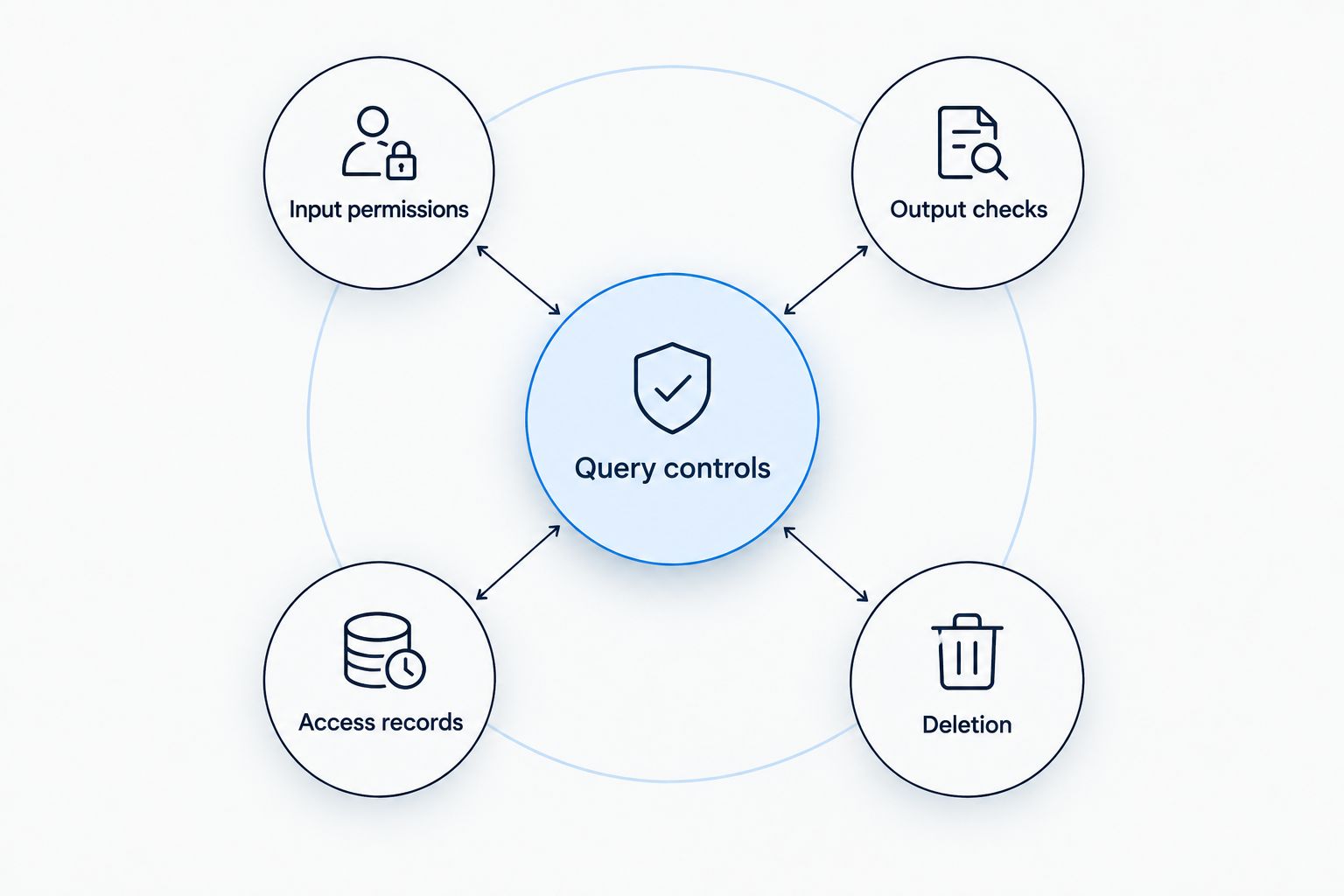
Review the whole workflow, not just whether analysts can see raw identifiers.
These are evaluation criteria, not capabilities to assume every provider supplies. Ask what happens when a query is rejected, an administrator changes a permission or a collaborator requests an export.
A demonstration should include a prohibited action as well as an approved one. A successful query proves that analysis works; a blocked query helps establish that the restriction works.
The same platform can support activities with very different legal and security risks. A 2026 procurement checklist should reflect the proposed processing, not just the product category.
The main drivers are:
Do not copy another advertiser’s approval. A similar dataset does not establish an equivalent purpose, lawful basis or risk profile.
A data protection impact assessment, or DPIA, is required under Article 35 when processing is likely to result in a high risk to individuals’ rights and freedoms. A clean-room deployment is neither automatically exempt nor automatically subject to that requirement solely because of its name.
Screen the proposed activity before implementation. Consider the applicable supervisory authority’s requirements and the characteristics of the processing, including profiling, sensitive information and the combination of datasets.
Planning around GDPR data protection impact assessment timelines belongs before the launch commitment, because unresolved questions about purposes, party roles and transfers can change the proposed workflow.
A useful DPIA describes necessity and proportionality, examines risks to people and records measures to address them. Where high residual risk remains without sufficient mitigation, Article 36 requires prior consultation with the supervisory authority.
Do not treat a completed template as the finish line. Revisit the assessment when a new matching partner, targeting purpose or export route changes the processing.
A controlled analysis environment does not control every destination automatically. Your export process deserves the same attention as the upload.
Suppose a brand measures overlap between its customer records and a publisher’s audience. An aggregate report and a list of matched people serve different purposes and create different disclosure risks.
For an aggregate report, inspect whether narrow filters or repeated reports reveal individuals. For an activation audience, establish what identifiers leave the environment, which recipient receives them and what that recipient is allowed to do.
Review the hand-off in a clear sequence:
Measurement is not permission to activate. If a collaboration moves from reporting into targeting, reassess the processing rather than assuming the original approval covers both.
Cake.Shop serves brands and independent agencies building modular programmatic advertising stacks. Its offering spans media buying and reporting, rich media and digital out-of-home creative, data clean rooms, and direct publisher supply; swweetshop is the platform that powers in-housing.
For a Cake.Shop programmatic advertising enquiry, describe the business workflow rather than asking whether the platform makes you compliant. Specify the data collaboration, intended outputs, creative requirements and publisher relationships that need to work together.
The modular approach makes those separate requirements explicit, but it does not remove the work of allocating responsibilities across them. Ask which controls apply to each module and each hand-off; do not infer a particular integration, contractual arrangement or compliance outcome from the platform description.
Cake.Shop’s role in the stack does not transfer your organisation’s accountability to a vendor. Your commercial brief and privacy assessment should describe the same intended activity.
Yes. GDPR compliance does not depend on using a clean room; it depends on meeting the requirements that apply to your processing. If your purpose can be achieved without customer-level collaboration, introducing a matching environment adds an activity you must justify and govern.
No. Consent addresses permission where it is the appropriate lawful basis, while a clean room addresses aspects of processing design. Valid consent does not remove requirements for minimisation, security, transparency or handling withdrawal.
Not automatically. UK GDPR and EU GDPR are separate regimes, and the applicable rules depend on your establishment, audience and processing. For a 2026 cross-market campaign, assess territorial scope and relevant electronic communications rules rather than relying on a single platform approval.
Is a data clean room necessary for GDPR compliance?
No. GDPR does not require a data clean room; it requires lawful processing, accountability and appropriate safeguards. A clean room can support controls without replacing those obligations.
Does hashing email addresses make customer data anonymous?
No, hashing email addresses does not automatically make customer data anonymous. Matchable or otherwise identifiable hashed records remain personal data, so GDPR obligations can still apply.
Do I need consent before uploading data to a clean room?
You need an appropriate lawful basis for the processing, and consent is not the only GDPR basis. Separate device-access or electronic marketing rules can also require consent, depending on the activity and jurisdiction.
Does every data clean room project need a DPIA?
No, the clean-room label alone does not determine whether a DPIA is required. Article 35 requires one where the processing is likely to result in a high risk to individuals’ rights and freedoms.
Who is the controller in an agency clean-room project?
Controller status depends on who determines the purposes and essential means of processing. The advertiser, agency and other participants need roles that reflect their actual decisions, not just their contract labels.
Can I export audiences from a clean room for advertising?
Audience export requires its own assessment of purpose, lawful basis, transparency, recipients and safeguards. Permission to produce aggregate measurement does not automatically permit person-level activation.
Does a clean room solve international data transfer requirements?
No, a clean room does not automatically resolve international transfer requirements. Assess data flows and access arrangements, then establish the applicable transfer mechanism and any additional safeguards required.
Start your 2026 review with the output, not the upload. Ask: what will leave this environment, who will receive it, and what can they learn or do with it?
That question exposes a common design mistake: restricting raw-data access while leaving revealing reports or reusable audiences insufficiently controlled. Approve the complete data journey, not just the room where matching happens. Obtain jurisdiction-specific legal advice before approving the processing; this article is general information, not legal advice.
Is a data clean room necessary for GDPR compliance? No. Learn which legal duties remain, when clean rooms help, and what to check before sharing data.
Read more →Can programmatic advertising target audiences without PII? Yes. Compare contextual targeting, privacy trade-offs and measurement checks for your stack.
Read more →How much does it cost to build a retail media network? Scope comes first. Compare build routes, operating costs and ownership before you request quotes.
Read more →Book a 30-minute demo and see exactly how Cake.Shop works — no sales pitch, just the platform.