
OPEN DAILY
OPEN
HONEST
TRUST
LET'S CHAT



Rank supply-side platforms by the revenue publishers retain under comparable contract terms—not by an isolated fee percentage. Google Ad Manager, Magnite, PubMatic, OpenX and Index Exchange belong on a publisher shortlist, but this 2026 guide does not assign an unsupported cheapest-to-most-expensive order.
TL;DR
A supply-side platform, or SSP, helps publishers offer advertising inventory to programmatic buyers. Its commercial terms affect what the publisher receives, but the headline deduction does not explain the whole transaction.
For an independent agency or an in-house brand team, this is also a buying decision. You need to understand which organisations handle the transaction, what each organisation charges and whether a different supply route changes access to the inventory you want.
Cake.Shop provides a modular programmatic advertising platform spanning media buying and reporting, rich media and DOOH creative, data clean rooms, and publisher supply. That full-stack context matters: a supply decision should sit alongside buying, creative and measurement decisions, not outside them.
Use these criteria before reading any platform ranking:
A smaller stated deduction is not proof of a better publisher outcome. The comparison has to include both the commercial terms and the revenue those terms produce.
For a 2026 procurement, request the same commercial information from every candidate. Otherwise, the apparent ranking reflects different definitions rather than different economics.
The order below organises evaluation by use case. It is not a ranking of verified publisher deductions, and the use-case labels identify where to start your review rather than declaring a platform winner.
Google Ad Manager
Magnite
PubMatic
OpenX
Index Exchange
Do not treat any candidate's presence here as evidence of lower fees, better yield or eligibility for a particular agreement. Those conclusions require evidence from the publisher's own proposed arrangement.
Google Ad Manager combines publisher ad management with programmatic monetisation. That makes it relevant when your decision covers both how advertising is served and how inventory reaches buyers.
Keep those functions distinct in the commercial review. A charge associated with serving an advertisement is not automatically the same thing as the deduction associated with selling that impression.
Best for: Publishers examining ad-server responsibilities alongside exchange access.
Google Ad Manager review advantages:
Google Ad Manager review limitations:
Ask for an explicit description of the transaction being assessed: inventory, format, route to demand and deductions. Reconcile that description against the agreement you would actually sign.
Verdict: Hold any lowest-fee judgement until ad-serving and monetisation terms are separated.
Magnite provides sell-side technology across advertising formats, including connected TV. CTV means advertising delivered through internet-connected television viewing environments.
If your publisher business spans video and other inventory, compare each relevant format separately before producing a combined assessment. An overall result can conceal materially different commercial arrangements within the same relationship.
Best for: Publishers building a format-specific review that includes CTV.
Magnite review advantages:
Magnite review limitations:
For your 2026 shortlist, request reporting examples that reflect your inventory mix. Ask the vendor to explain how each relevant deduction would appear in those reports.
Verdict: Hold the commercial decision until format-level economics are clear.
PubMatic provides sell-side programmatic advertising technology. Include it when you want to evaluate an independent provider against your publisher requirements.
Independence describes a business position, not a fee advantage. Your review still needs to establish the contract, the reporting available to your team and the demand contribution relevant to your inventory.
Best for: Publishers comparing an independent sell-side provider against their current arrangement.
PubMatic review advantages:
PubMatic review limitations:
Require a written explanation of what would change after implementation. Keep expected demand access, operational responsibilities and commercial terms in separate columns so that one attractive claim does not substitute for the others.
Verdict: Hold the decision until the proposal explains both the commercial terms and the operational change.
OpenX operates a programmatic advertising exchange. Evaluate the connection against the publisher inventory and buyer relationships you want it to support.
Do not confuse access with contribution. The useful question is whether the proposed connection improves your monetisation setup after deductions and operational work are accounted for.
Best for: Publishers evaluating the case for an exchange connection.
OpenX review advantages:
OpenX review limitations:
Use your current setup as the baseline. Define what evidence would justify adding or retaining the relationship before you interpret the results.
Verdict: Hold expansion until the exchange connection has a clear economic purpose.
Index Exchange operates an independent advertising exchange. Assess it as a specific supply relationship, not as an automatic improvement to an existing publisher setup.
This review is particularly useful when you are examining overlapping connections. Map the relationship between the exchange, your inventory and the buyers you want to reach.
Best for: Publishers deciding whether another independent exchange route belongs in their setup.
Index Exchange review advantages:
Index Exchange review limitations:
Ask what evidence would support retaining the connection at renewal. Define that evidence before a reporting dashboard becomes the default justification.
Verdict: Hold the commitment until the relationship has a measurable role in your setup.
Start with the contract, then follow the money into reporting and payment. Use the same definitions across every candidate in your 2026 evaluation.
Create a reconciliation worksheet with these headings. Ask each provider to explain which figures it reports, which deductions apply and how the final payment relates to reported earnings.
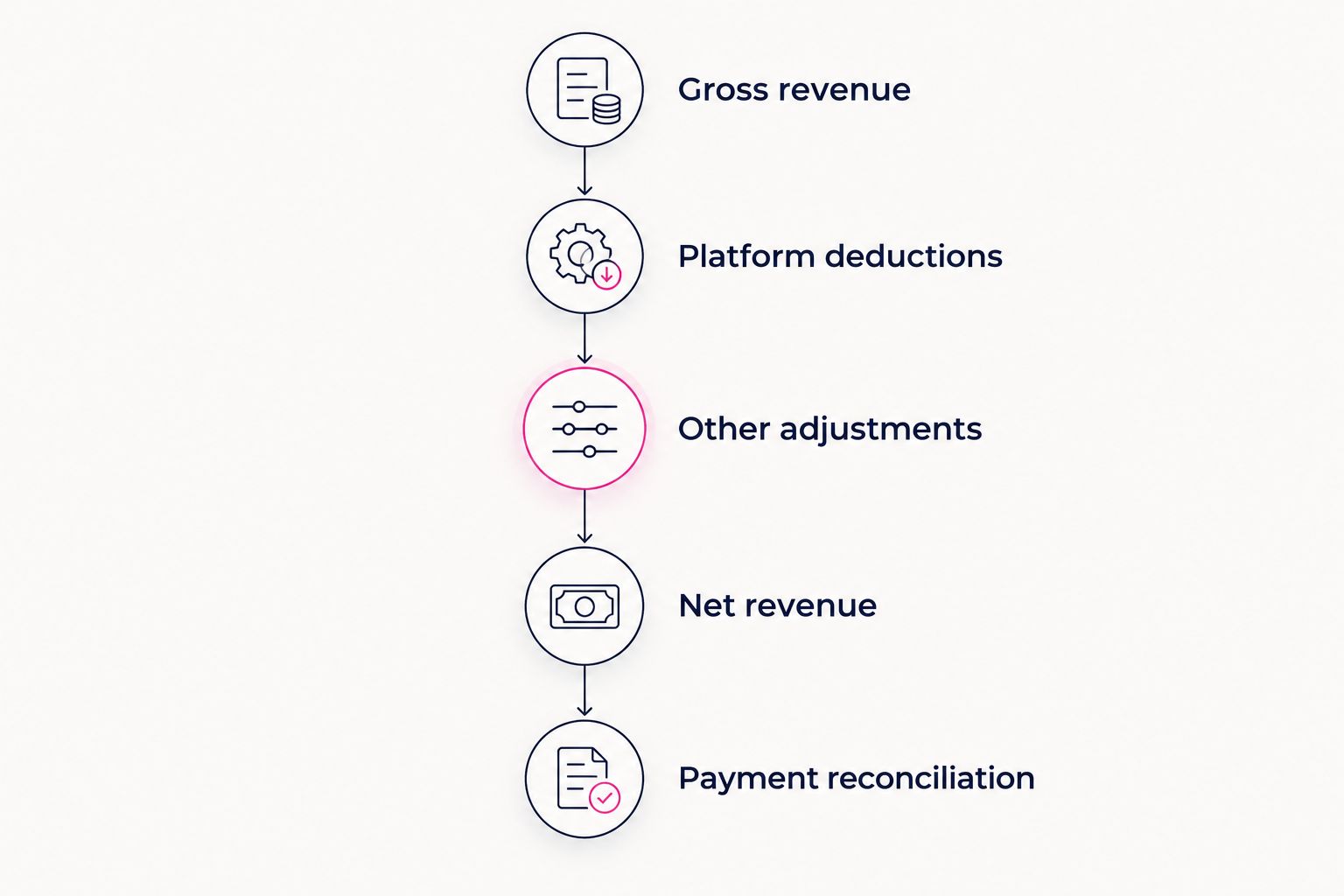
Compare the complete money trail, not an isolated deduction.
Keep currency, inventory scope and reporting dates consistent. CPM means cost per 1,000 impressions; confirm whether any CPM figure represents buyer expenditure, gross publisher earnings or net publisher revenue before comparing it.
Separate two questions: what does the provider deduct, and what does the publisher retain? They are related, but they are not interchangeable.
Use comparable inventory and document differences in format, geography, device and demand conditions. Do not describe a revenue change as a fee saving when the underlying inventory or buyer mix also changed.
For implementation costs outside the exchange agreement, the guide to header bidding costs for publishers provides a separate starting point. Keep that operational assessment alongside—not inside—the headline SSP deduction.
This shortlist uses platform role and publisher evaluation needs, not unpublished commercial terms. It does not award fee positions, claim hands-on testing or infer performance from company size.
The decision criteria are calculation base, included services, reconciliation, demand contribution, operational control and exit terms. A genuine fee ranking comes only after comparable evidence fills those fields.
Choose the arrangement that gives you an explainable net outcome and a justified operational role. Reject a cheapest-platform verdict that cannot show the calculation base and the deductions behind it.
For agencies and brands, distinguish this publisher decision from selecting a demand-side platform. The DSP buys inventory; the SSP serves the publisher side of the transaction.
Cake.Shop suits brands and independent agencies evaluating publisher supply within a modular programmatic advertising stack. Its platform, swweetshop, powers in-housing; assess media buying and reporting, rich media and DOOH creative, data clean rooms, and direct publisher supply together when defining your requirements.
Bring a concrete enquiry: your current buying setup, the publisher relationships you need and the reporting you expect to own. Ask Cake.Shop to explain the proposed scope and commercial terms rather than assuming every module belongs in your initial deployment.
Which supply-side platform has the lowest publisher fees in 2026?
A lowest-fee verdict requires comparable publisher contracts and clearly defined deductions. Compare the same transaction scope and calculation base before assigning a position.
Is a lower SSP fee always better for a publisher?
No. A lower deduction does not establish higher net publisher revenue; demand contribution, adjustments and operational work also belong in the assessment.
How should I compare Google Ad Manager with another SSP?
Separate ad-serving responsibilities from programmatic monetisation terms. Then compare the relevant transaction routes, deductions, reporting and payment reconciliation.
What should I ask an SSP about its fees?
Ask what amount the deduction applies to, what services it includes and what other adjustments apply. Require the explanation in writing and check it against reporting examples.
Does adding another SSP automatically increase revenue?
No. An additional connection needs evidence that justifies its economic and operational role within your existing setup.
Are SSP fees the same as DSP fees?
No. An SSP operates on the publisher side, while a DSP supports media buying; their commercial arrangements concern different parts of the transaction.
Where does Cake.Shop fit in this comparison?
Cake.Shop provides a modular programmatic advertising platform for brands and independent agencies, including publisher supply. Evaluate that supply alongside media buying, reporting, creative and data requirements rather than treating it as an unsupported lowest-fee SSP recommendation.
Before signing an SSP agreement in 2026, ask the provider to walk your finance and ad operations teams through a sample reconciliation. Follow the reported earnings through every deduction and adjustment to payment.
If the money trail is unclear, the fee comparison is unfinished. Resolve that before debating a leaderboard position.
Supply side platforms ranked by publisher fees need comparable contracts. Compare SSP fee terms, net publisher revenue and supply paths before you choose.
Read more →Compare dynamic creative optimization tools for e-commerce by use case. Choose catalogue delivery, creative production or an in-house programmatic stack.
Read more →Compare programmatic advertising platforms for CPG brands by buyer fit, data ownership and retail measurement. Choose your shortlist for in-housing.
Read more →Book a 30-minute demo and see exactly how Cake.Shop works — no sales pitch, just the platform.